
The Backseat Rally off road stage matters because traction, visibility, and medal targets can change with the forecast. Learn how mud, mountain, and cherry blossom conditions demand different lines so every run stays controlled and competitive.
Backseat Rally Off Road Stage Overview
The Backseat Rally off road stage is a momentum test disguised as a rough-road drive. A fast car can still lose seconds when mud pulls the tires sideways, a mountain section hides the next bend, or rain makes braking distances unpredictable. The stage rewards deliberate inputs: set the line early, keep the throttle smooth, and avoid forcing extra speed after a mistake.
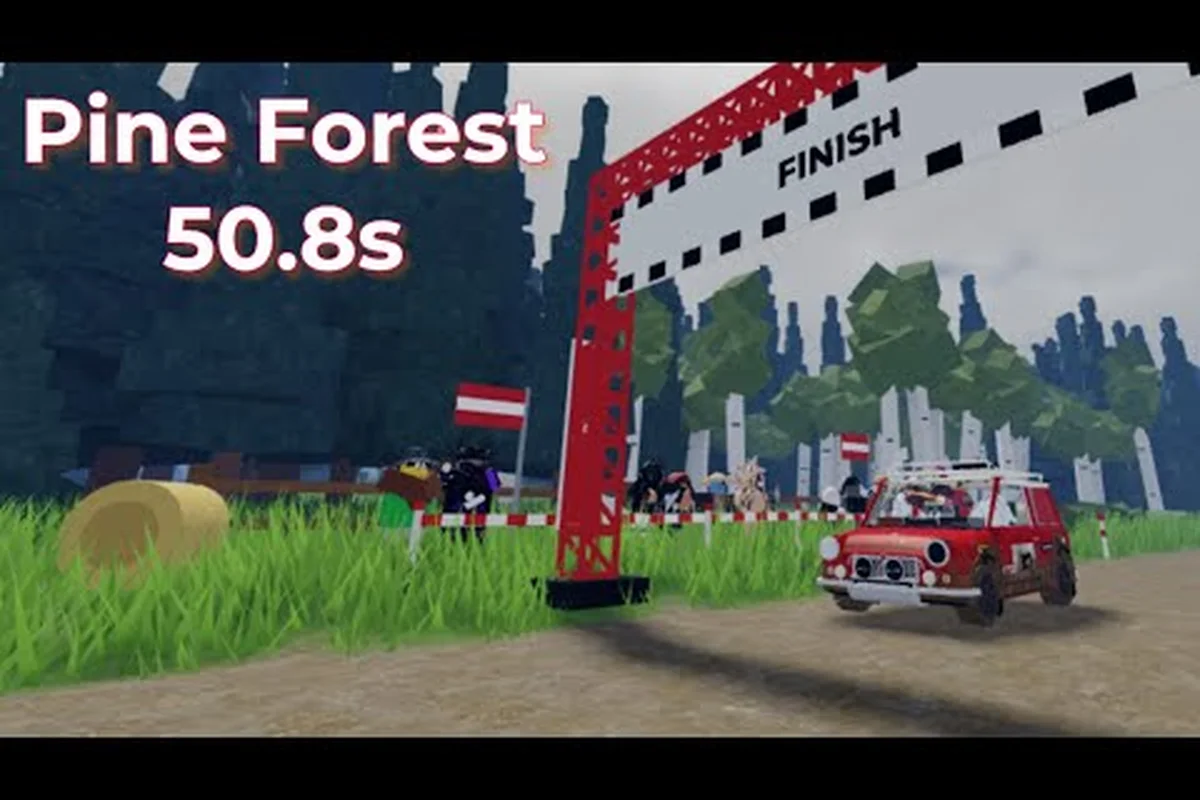
Player experience provides the clearest available evidence for this stage. In a verified Stage 5 record run by GakuranBoy, the mud crossing is shown at 1080p with a momentum-focused racing line, early braking before off-camber sections, and steady throttle through deep ruts. Those details are especially useful because they show how a successful run preserves speed without allowing the car to wander across the available traction.
| Stage element | Main challenge | Best driving priority | Common mistake |
|---|---|---|---|
| Mud crossing | Loss of lateral grip | Smooth throttle and early braking | Sudden steering corrections |
| Mountain route | Blind bends and elevation | Position before the turn | Waiting until the apex |
| Cherry blossom road | Loose surface and visual clutter | Maintain a clean, repeatable line | Chasing the scenery |
| Wet weather | Longer stopping distance | Enter corners at a lower speed | Braking at the last instant |
A reliable medal strategy starts with classifying the actual conditions rather than replaying a memorized route. The broader Backseat Rally all stages overview is useful for comparing the off road event with forest, snow, and paved routes, but this stage has a distinct need: preserve usable momentum across changing surfaces.
Core Stage Checklist
-
Identify whether the active surface is dry, wet, muddy, or mixed.
-
Reduce speed before the turn, not while the car is already sliding.
-
Keep steering inputs small when the rear of the car feels loose.
-
Use a stable throttle input through deep ruts and shallow water.
-
Treat the finish as part of the medal run; do not ease off early.
-
Replay the stage to compare lines, not merely to recover lost time.
What Determines a Clean Run?
A clean run contains few abrupt inputs. The driver anticipates traction loss, chooses a line before entering a technical section, and keeps the car balanced. This is especially important when reviewing Backseat Rally stage difficulty, because a route may look straightforward on dry pavement but become demanding when the same corners sit on mud, loose gravel, or a rain-darkened surface.
The useful measure is not maximum speed reached. It is the time lost across the full route. A driver who briefly slows from full pace but avoids a spin can finish much closer to the target than a faster driver who repeatedly catches the car with abrupt steering.
Backseat Rally Weather Stages and Grip Changes
Weather changes more than visual texture. It changes the available grip, the distance needed to stop, and the amount of steering correction the car can absorb. On this Backseat Rally off road stage, a muddy crossing behaves differently from a dry mountain road, while rain can make an otherwise familiar section feel unpredictable.
The conditions should be handled through three separate checks: grip, visibility, and braking distance. If all three are evaluated, the driver can identify whether a section is merely wet or genuinely low-grip. A surface may look dark after rain while still providing decent traction, or it may appear harmless until the tires sink into a hidden rut.
| Condition | Grip effect | Visibility effect | Recommended setup |
|---|---|---|---|
| Dry | Strongest predictable grip | Generally clear | Commit sooner, but keep margin |
| Light rain | Reduced braking grip | Moderate glare or spray | Brake earlier and use a smoother trail |
| Heavy rain | Weaker grip and longer stops | Reduced contrast | Lower pace and wider lines |
| Mud | Low lateral grip and heavy drag | Ruts can hide direction | Short inputs and steady throttle |
| Snow or ice | Very low grip | Terrain edges become unclear | Brake early and avoid abrupt steering |
For a wider view of condition-specific handling, the Backseat Rally stage-weather reference can help distinguish rain, mud, and snow. The practical rule is simple: dark surfaces deserve more caution, but the strongest warning sign is usually a change in the car’s response rather than the color of the road.
Mud Crossings
Mud rewards patience. The verified record run demonstrates early braking before off-camber areas and a steady throttle through deep ruts, two techniques that directly address the way mud can unsettle a car. A sudden throttle surge may briefly push the car forward, but it can also unload the rear tires and make the next steering input less effective.
When the surface becomes soft, follow a line that minimizes side-to-side movement. Avoid crossing sharp ridges at an angle, because the raised edge can act like a small ramp. If the car begins to yaw, reduce steering pressure and let the tires find a more stable direction. Fighting a slide with larger inputs usually extends the recovery.
Rain and Wet Roads
Rain increases braking distance, especially on an off-road surface where tires may also search for purchase. Move the braking point earlier and keep the car straighter during the stop. A sudden change of direction while braking can transfer weight across a wet surface and make the rear step out.
The related Backseat Rally wet-weather and mud driving guide offers useful condition-specific preparation. On this route, the key adaptation is to enter technical sections with enough space to correct a slide. A slightly lower entry speed often produces a faster total time than an aggressive approach followed by a long recovery.
Mountain Sections
A mountain route rewards commitment only when the road is visible. On Blind bends, position the car toward the outside before the apex, then rotate smoothly toward the inside. Braking too late on a wet descent can waste more time than taking a slower entry. The objective is controlled rotation, not a dramatic change of direction.
Backseat Rally Difficulty From Terrain and Visibility
Backseat Rally stage difficulty changes with the combined demands of terrain, weather, visibility, and route layout. Difficulty is not simply the number of turns. A narrow road may be easier than a wide muddy clearing because the clearing offers several tempting lines but little reliable grip.
The most useful breakdown separates the stage into sections with distinct jobs. This makes it possible to diagnose a slow run: lost time on the mountain may come from late braking, while lost time in the cherry blossom section may come from oversteering or an inconsistent approach.
| Route section | Difficulty factor | Main skill tested | Time-saving approach |
|---|---|---|---|
| Start and acceleration | Traction from a standstill | Controlled launch | Ease into speed without wheelspin |
| Mud cross | Changing resistance and ruts | Throttle modulation | Stay straight and keep power even |
| Mountain ascent | Blind curves and limited sight | Anticipation | Position early and brake in a straight line |
| Cherry blossom route | Loose surface and visual distraction | Line consistency | Follow one smooth path |
| Final acceleration | Grip and exit momentum | Carrying speed | Avoid lifting before the line opens |
Diagnosing a Slow Run
Compare the run by section instead of watching only the final time. If the opening is clean but the middle collapses, the issue is probably tied to a specific surface transition. If the car looks fast from the outside yet loses several seconds, steering corrections may be interrupting acceleration.
| Symptom | Likely cause | Correction |
|---|---|---|
| Car slides on corner entry | Entry speed exceeds available grip | Brake earlier |
| Speed falls in straight mud | Wheelspin or excess steering | Use a smaller, steadier throttle input |
| Repeatedly misses the mountain apex | Late positioning | Move to the outside before the bend |
| Fast at first, slow near the finish | Line changes and overcorrection | Repeat the same line and keep exits clean |
| Off-road time varies greatly by attempt | Weather-dependent grip | Build separate routines for each condition |
Community-reported behavior should be treated as a clue rather than a fixed rule, because vehicle setup and platform version may alter handling. Still, the repeated pattern is consistent: early braking and smooth inputs preserve more time than aggressive corrections. More context about varying conditions appears in the Backseat Rally dynamic-weather overview, which covers the broader relationship between terrain and grip.
Difficulty by Weather
Dry conditions reveal the route’s geometry most clearly, making them useful for learning the correct line. Mud hides small ridges and turns a straight section into a traction-management exercise. Heavy rain adds braking uncertainty, while snow or ice reduces the margin for error to its smallest level.
A practical difficulty progression is to learn the route in dry or stable conditions, then add mud, and finally test the most changeable forecast. The Backseat Rally low-grip handling guide can support that progression by focusing on the changes that matter when traction becomes less dependable.
Backseat Rally Stage Medals and Time Management
Backseat Rally stage medals are won through consistency across every section, not one dramatic overtake or a single perfect landing. A medal run depends on a balanced time loss: small errors that add up are harder to overcome than a single large mistake, and avoidable spins near the finish are especially expensive.
The available community record is most useful as a visual benchmark. In GakuranBoy’s verified Stage 5 run, the mud crossing demonstrates an early braking point before off-camber terrain and a stable power delivery through deep ruts. Players can study that sequence as a model of momentum control, though the video alone should not be treated as a universal target time because vehicle, version, and route conditions can change the comparison.
| Medal priority | What to protect | Best time-management choice |
|---|---|---|
| Gold pursuit | Every tenth of a second | Keep the racing line clean and avoid all major slides |
| Silver pursuit | A small number of minor errors | Prioritize corner exits and stable acceleration |
| Bronze pursuit | Completing the route efficiently | Reduce repeated spins and recover immediately |
| Practice target | Driver confidence | Build a repeatable routine by section |
Keep One Routine, Change the Conditions
Use the same short routine on every attempt, changing only what the conditions require. First, inspect the forecast and identify the lowest-grip part of the route. Second, decide on a conservative entry speed for the first technical corner. Third, drive through the mud cross with smooth, even throttle. Fourth, compare the mountain and cherry blossom approaches against the previous run.
A routine is more valuable than a long list of disconnected tips because it reduces decision time. When a run begins to go wrong, the most common error is a sudden increase in effort. Instead, return to the baseline routine: straighten the car, stabilize the throttle, and continue toward the next known point.
Protect the Finish
Many competitors focus on the visible middle of the route and lift before the finish. That sacrifices the momentum developed in the last acceleration zone. If the surface permits it, keep the power stable through the exit and finish the final corner without an unnecessary early release. The medal clock measures the full run, so carrying speed into the line is valuable.
The other key lesson is to avoid changing lines simply because a previous attempt looked imperfect. Find the useful reference points, such as the approach to an off-camber section, and use them consistently. A stable line gives faster feedback than chasing an ideal-looking path that may actually suit the dry surface but not the mud.
Backseat Rally Cherry Blossom Stage Tips
The Backseat Rally cherry blossom stage tips begin with line discipline. Flowers and roadside scenery can make the route visually busy, while loose ground around the route can make small steering corrections feel larger than expected. A driver who follows a simple reference path will usually create more consistent times than one who constantly searches for a different path.
The cherry blossom route is also a useful test of commitment. Once the car is balanced, steering should remain small and the throttle should not pulse. Repeatedly adding and removing power can unsettle the car, particularly if the surface is damp beneath the scenic section. Let the car settle after the initial steering input before demanding more speed.
| Situation | Better response | Why it works |
|---|---|---|
| Car begins to drift outward | Reduce steering angle and hold throttle steady | Prevents an overcorrection cycle |
| Route surface looks loose | Choose the smoother visible line | Reduces abrupt changes in resistance |
| Flowers distract from the bend | Use a fixed roadside landmark | Preserves visual consistency |
| Exit feels slower than entry | Avoid a late throttle spike | Maintains balance through the surface change |
| Time is lost across two corners | Rebuild the same entry routine | Removes small inconsistencies |
For broader route context, the Backseat Rally all stages reference can show how the cherry blossom road fits among the other environments. The practical test is whether the car exits in a straight, stable state. If it does not, the issue is usually the entry or line choice, not the final acceleration.
Find a Stable Reference Point
Choose one clear feature visible before the turn, such as a tree, roadside marker, or change in road width. Enter with the car aligned to that reference, then settle into the turn. This reduces the temptation to make several small corrections while the car transitions onto the loose surface.
A stable reference is especially valuable in changing weather. When grip is lower, visual confidence may exceed mechanical confidence, but the same reference still keeps the input pattern consistent. That consistency makes it easier to tell whether a slow time came from a bad line, excessive entry speed, or a momentary slide.
Backseat Rally Mountain Stage: Anticipation First
The Backseat Rally mountain stage is defined by anticipation. Bends arrive with limited sight distance, elevation changes alter the rhythm, and a wet surface can make the braking zone longer than expected. Success comes from deciding where to slow down before the mountain removes the option to adjust safely.
Positioning should begin on the straight or gentler entry before a bend. If the car reaches a hairpin too close to the apex, the driver must either brake late or force a wide line. Both choices waste time. Moving toward the outside early provides room for a smooth rotation and a more direct exit.
| Mountain hazard | Early preparation | Execution focus |
|---|---|---|
| Blind corner | Choose the position before the view opens | Brake while the car is still straight |
| Wet descent | Move the braking point uphill | Avoid abrupt steering under load |
| Narrow road | Fix a reference point early | Use fewer corrections |
| Crest | Ease the steering before the rise | Keep the car balanced over the change |
| Hairpin | Select a slower entry | Rotate and accelerate in one smooth sequence |
Mountain driving rewards a calm rhythm. The driver sees an upcoming hazard, reduces speed in a controlled way, places the car, and accelerates out. If the route changes visibility after the turn, trust the established approach rather than making a dramatic last-second input. The Backseat Rally mountain and terrain overview provides a useful companion for comparing elevation, surface, and weather effects.
Descending with Control
Wet descents require extra braking distance because gravity continues to pull the car forward after the brake input begins. Start braking earlier, keep the steering nearly straight, and lower the target speed compared with a dry run. Trying to compensate for excessive speed with sharp steering can turn a controlled descent into a slide.
The goal is not to crawl through the entire mountain section. Momentum remains important for the medal time. Instead, remove speed before the difficult point, maintain a balanced trajectory, and rebuild acceleration as soon as the car points toward the exit.
Final Practice Checklist for the Off Road Stage
A strong Backseat Rally off road stage performance combines a reliable line, early decisions, and smooth inputs. Check the weather before the run, identify whether the mud or mountain section sets the hardest limit, and use a deliberate braking point on every attempt. The fastest-looking driving is not always the quickest driving; measured momentum is the better benchmark.
| Stage | Final objective | Success signal |
|---|---|---|
| Mud cross | Maintain direction without wheelspin | The car remains stable and keeps moving |
| Mountain route | Position before blind bends | Braking and turning happen in sequence |
| Cherry blossom road | Hold one clean line | Few steering corrections and quick exits |
| Medal run | Protect every tenth of a second | Consistent section times without major slides |
| Recovery | Limit the damage after a mistake | No extra slide and no early lift |
Review the run once, identify the single section responsible for the lost time, and adjust the next attempt around that area. If a route feels unfamiliar, learn it without weather first; if it feels slippery, revisit the Backseat Rally weather-stage reference before changing the line. The off road stage rewards a driver who knows exactly what the surface is asking for.
Frequently Asked Questions
What is the best technique for the Backseat Rally off road stage?
Keep the car balanced with small steering inputs, smooth throttle, and braking before the difficult sections. On mud, hold a steady power delivery through ruts rather than accelerating sharply. On the mountain route, position early because blind bends remove the ability to brake and turn safely at the same time.
Does rain make the Backseat Rally off road stage more difficult?
Yes. Rain generally increases braking distance and can reduce steering grip, particularly on loose or muddy surfaces. Brake earlier, keep the car straighter during deceleration, and lower the entry speed of technical corners. The driving line may remain the same, but the amount of speed carried into each turn should change.
How do I improve my Backseat Rally stage medals on muddy routes?
Focus on momentum control rather than raw power. Keep the steering centered through the deepest ruts, avoid sudden throttle pulses, and begin slowing before off-camber sections. Compare your line with the mud sequence shown in GakuranBoy’s verified record run, then refine the braking point and throttle consistency.
What should I change on the Backseat Rally cherry blossom stage tips?
Focus on a repeatable reference point and a smooth, straight line. Avoid changing direction merely because the scenery shifts or the car feels slightly loose. Use gentle steering corrections and maintain even throttle. If the car exits a turn unevenly, slow the entry before searching for a different route.
Is the Backseat Rally mountain stage harder in bad weather?
It can be because braking distance and available grip both become less predictable. Use an earlier braking point, descend more slowly, and keep the car straight while the weight shifts. The mountain route becomes more manageable when each bend is approached in a straight line and the car is already positioned before the corner becomes visible.