
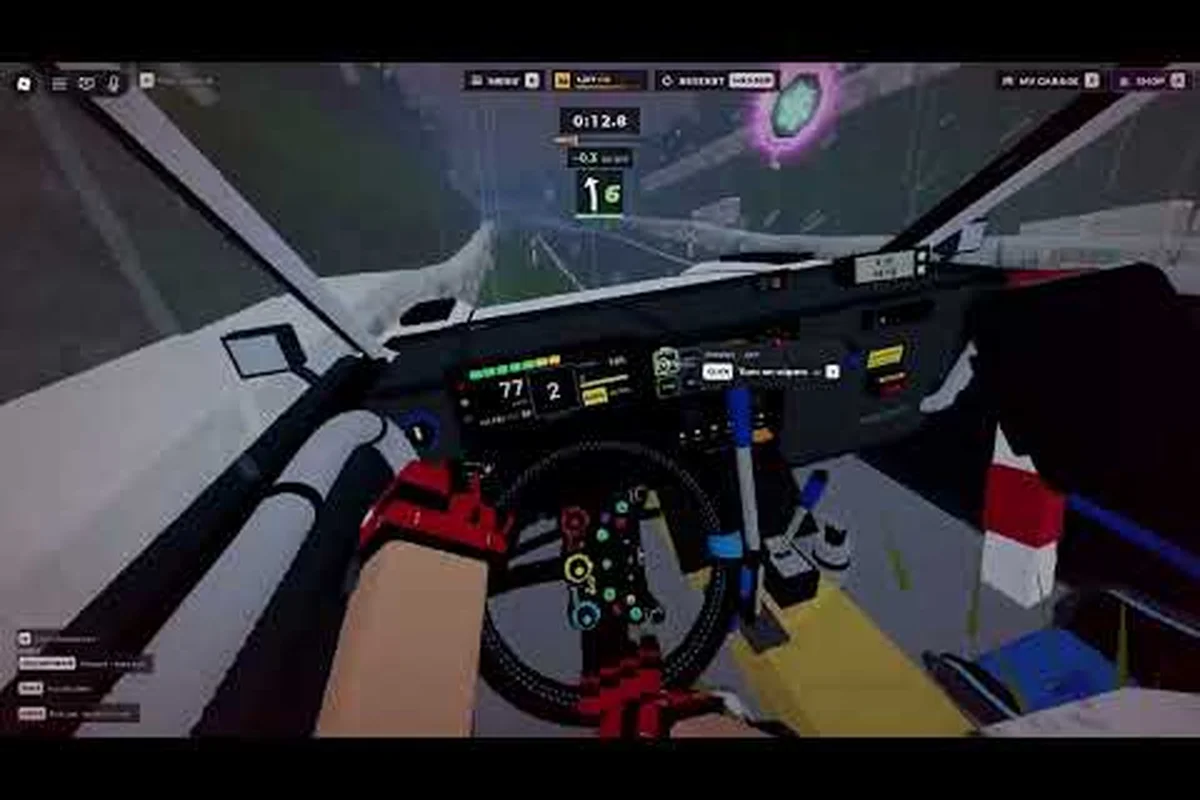
Backseat Rally route tips matter because a clean lap depends on carrying speed through the right line, not simply holding the accelerator longer. Learn how each track layout shapes your fastest route, how corners and hairpins change priorities, and which stage unlock order gives new racers the smoothest progression.
Backseat Rally Route Tips Start With the Track Layout
A useful route is built from entry position, corner speed, and exit momentum. The car’s current speed matters, but the road ahead determines whether that speed can remain useful. Read the entire visible section before choosing a line, because a correct mid-corner position is worthless if the next corner requires a full stop.
Backseat Rally track layout can be simplified into four repeating types—long straight, fast sweeper, tight corner, and hairpin—because each type has a different braking and rotation demand. For example, a long straight favors the fastest route only if the next braking zone remains visible, while a hairpin should be planned as a controlled direction change rather than a late-braking shortcut. This classification also helps with Backseat Rally stage unlock order: recognizing the next layout type before the road disappears lets you preserve exit momentum instead of arriving at the following corner already understeering.
| Layout feature | Main advantage | Main risk | Best first priority |
|---|---|---|---|
| Long straight | Free acceleration | Overconfidence before the next braking zone | Keep tires straight and reach the brake marker |
| Fast sweeper | Carry a high line | Early steering creates understeer | Brake before turn-in |
| Tight corner | Easy control and rotation | Losing all exit speed | Aim for a late apex |
| Hairpin | Maximum direction change | Excess braking or a wide entry | Complete the slowest part cleanly |
This simple classification makes the Backseat Rally fastest route easier to understand. On a straight, the racing line is nearly obvious. At a tight corner, the best route is usually shorter but requires more discipline. On a sweeper, the entry and exit shape matter more than the point at the wheel is turned.
Read the first visible decision
When a stage first comes into view, identify the next decision point rather than trying to judge the entire route at once. A good first decision could be “brake before the tree line,” “take the inside lane,” or “stay left to preserve the forest exit.” This prevents the common mistake of turning early because the corner looks tighter than it actually is.
The Backseat Rally driving line guide provides a useful visual framework for comparing an early apex with a late-apex approach. The key is to choose a line you can repeat, because a route that saves one corner but forces an extra correction rarely creates the fastest lap.
Use three route zones
Divide every stage into three practical zones based on the road ahead: first, identify the braking point and the lane needed to set up the corner; next, define the apex and a speed target that allows a stable rotation; finally, choose the exit line that points toward the next decision. This approach turns the Backseat Rally corner guide into a repeatable rhythm, preventing the navigator from calling only the apex and helping the driver preserve momentum for the following corner.
-
Approach zone: Choose where to brake and which lane to reach before the corner.
-
Corner zone: Prioritize a stable rotation and a realistic speed target.
-
Exit zone: Drive the car toward the next decision without drifting across the road.
This zoning system is particularly useful for the Backseat Rally corner guide because it keeps the driver from focusing only on the apex. A technically perfect apex followed by a careless exit still gives away the time gained at corner entry.
Backseat Rally Best Route Choices by Corner Type
The Backseat Rally best route is rarely the same at every bend. Some corners reward a traditional late apex, while others are safer with a slightly wider line and earlier throttle. The correct choice depends on the bend’s radius, the available runoff, and what follows.
Sweepers: use the road’s geometric center
On a fast sweeper, take a shallow line that follows the inside of the curve without crossing the apex too early. Wide-entry geometry helps the car remain stable, but a line that reaches the far outside of the road can create extra work on exit.
| Corner type | Recommended route | Braking point | Throttle target |
|---|---|---|---|
| Fast sweeper | Gentle inside line | Before the curve | Medium, then increase with steering |
| Medium corner | Late-apex line | Near the first turn-in marker | Resume after rotation |
| Tight corner | Inside line with a stable exit | Early enough for a controlled turn | Apply once the nose points out |
| Hairpin | Outside-inside-outside only if space allows | Before the hairpin | Very low until the car rotates |
| Chicane | Short line across the middle | Before the first apex | Pulse through each direction change |
A player watching a community run should notice more than the vehicle’s top speed. Line consistency usually separates a clean stage attempt from a fast but inconsistent one. If the same corner requires a last-second correction on every attempt, the route is not yet stable.
Corners after a straight
A straight can create an illusion of unlimited speed. When the road narrows after acceleration, begin braking according to the next corner, not the current road width. This is where choosing the Backseat Rally fastest route becomes a braking decision as much as a steering decision.
A practical method is to mark three points in your mind: the brake point, the apex point, and the exit target. On a narrow backseat rally stage, braking earlier than the visible corner usually preserves momentum and gives the driver time to set the car’s direction; for example, approaching a tight right after a fast straight, call the braking point before the road visibly bends, then use the apex to avoid clipping the inside curb. The exit target prevents a late, abrupt correction when the next corner is already close, making the route easier to drive consistently and the co-driver’s instructions more precise.
-
Brake point: Where steering input must begin.
-
Apex point: The closest useful point to the inside.
-
Exit target: The lane needed to reach the next corner cleanly.
This three-point plan reduces random adjustments and makes co-driver calls more useful. When the driver knows the brake point, apex point, and exit target, a call such as “left, tight” becomes a precise instruction rather than general information: “brake now,” “apex left,” and “exit toward the right-side verge.” For example, after a fast straight into a tightening right-hander, the co-driver can flag the brake point before the visible bend, then confirm the apex and exit target so the driver can carry speed without a late correction into the next corner.
Backseat Rally Hairpin Guide for Clean Direction Changes
A hairpin is not merely a very slow corner. It is a direction-change zone where braking, gear selection, steering angle, and throttle timing all become visible. A sloppy hairpin may not lose much time by itself, yet it can ruin the following straight by leaving the car on the wrong side of the road.
The outside-inside-outside question
The textbook outside-inside-outside route creates the smallest turning radius, but it is not always the quickest on a narrow stage. If the road is limited, use a more direct line that allows a cleaner exit. Route choice should account for the entire corner rather than preserving a textbook shape at the cost of momentum.
| Hairpin condition | Better route | Reason |
|---|---|---|
| Wide paved area | Outside-inside-outside | Uses the full turning circle |
| Narrow entry and exit | Direct inside approach | Reduces lane changes |
| Descending corner | Slightly wider entry | Helps preserve control |
| Ascending corner | Earlier throttle application | Helps the car pull away cleanly |
| Following straight | Exit directly toward it | Saves a corrective movement |
For more detailed position guidance, treat the Backseat Rally hairpin guide as a decision tree: first check road width, then visibility, then the exit. On a wide hairpin, favor the outside-inside-outside route from the table to maximize the turning circle; in a narrow section, a direct inside approach can reduce lane changes. If the exit is poorly visible, sacrifice a little entry width to keep the car stable and avoid a corrective movement on corner exit.
Do not accelerate while the car is still rotating
The most common hairpin error is applying power while the car still points toward the outside wall. That can push the car wide and make the driver correct late. Instead, wait until the chassis has begun rotating toward the exit, then apply a controlled amount of throttle.
At low speed, small steering corrections are more effective than dramatic inputs. Slow rotation is often the cleanest route, while excessive sliding adds understeer and lengthens the exit. The aim is not to rotate as quickly as possible; it is to reach a stable exit with the car pointed correctly.
Backseat Rally Stage Unlock Order and Progression Plan
A sensible Backseat Rally stage unlock order helps players build technique before they encounter more complicated layouts. Since the available stages and conditions can vary by game version, treat the route advice as a progression framework rather than a fixed checklist of stage names.
| Progression stage | Route skill to learn | Best practice focus |
|---|---|---|
| First available stage | Basic corner entry and exit | Stay on the road and finish consistently |
| Second stage | Carrying momentum | Connect the exit of one corner to the next straight |
| Third stage | Stronger braking zones | Identify braking earlier and avoid last-second inputs |
| Fourth stage | Technical turns | Practice hairpins and tighter direction changes |
| Advanced stage | Mixed surface demands | Adjust the line without changing the fundamental plan |
| Final challenge | Full-route consistency | Reduce both lap time and unnecessary movement |
This approach makes the Backseat Rally best route something you can practice, not merely a line you try once. Each new stage should test one additional skill. If a new layout combines several demanding corners, repeat an earlier stage to stabilize the relevant technique before returning to the challenge.
Avoid choosing stages only by apparent difficulty
Track layout can make a stage harder than its general difficulty label suggests. A narrow route with several blind corners may be tougher than a longer course with open sweepers. Watch the complete Backseat Rally track layout before choosing where to practice, and pay particular attention to repeated braking zones.
Your Backseat Rally car selection overview also matters here. A vehicle that feels lively on a straight may demand more attention in a tight corner, while a stable car can make a hairpin look easier. Route improvement and car performance should be evaluated together instead of blaming the car for every steering problem.
A repeatable unlock practice routine
Whenever a new stage becomes available in the Backseat Rally stage unlock order, treat it as a separate route-learning project rather than immediately chasing the Backseat Rally fastest route time. First, identify the track layout, corner guide references, hairpin guide notes, and likely braking points from the stage preview; then choose one line through the opening sequence and compare it with the stage’s best route only after the driving pattern is repeatable. This makes any time loss easier to diagnose, especially when a specific corner or hairpin is causing inconsistent entry speed, late braking, or a wide exit.
- Drive one slow reconnaissance run and mark every major braking zone.
- Attempt the stage at a controlled pace without chasing a personal best.
- Repeat the same route until the line and corner speeds feel consistent.
- Shorten one section at a time rather than increasing speed across the whole stage.
- Record the result and compare the route, not only the final time.
This routine is especially useful for the Backseat Rally stage unlock order because each new track becomes a controlled learning project. It also reveals whether a time loss comes from the first corner, a mid-stage hairpin, or the final exit.
Fastest Route Decisions by Surface and Layout
The same line can behave differently when the surface changes. The Backseat Rally fastest route is always relative to grip, visibility, and road width. A route that works on dry pavement may require a gentler entry on mud, snow, or wet ground.
Adjust the line, not just the speed
When grip decreases, the car needs more space to begin turning. Move the braking point slightly earlier and use a smoother steering input. The Backseat Rally dynamic weather guide explains how terrain changes can alter the amount of usable traction, which directly affects the safest and quickest line.
| Condition | Route adjustment | Cornering focus |
|---|---|---|
| Dry pavement | Use the normal geometric line | Commit sooner to a stable apex |
| Wet surface | Brake earlier and avoid abrupt steering | Keep inputs smooth |
| Snow | Reduce speed and widen the approach | Preserve momentum without sudden corrections |
| Mud | Choose the firmer line if visible | Limit lateral movement |
| Loose gravel | Avoid abrupt throttle and steering | Keep the car settled through the bend |
Visibility changes route priorities
Limited visibility means the next braking point may remain hidden longer. In that situation, use a lower entry speed even if a later corner appears to offer a faster line. The cost of entering too fast is usually greater than the time saved by carrying extra speed into a blind junction.
The Backseat Rally route tips that matter most in these sections are simple: scan farther ahead, brake earlier, and make one correction at a time. A driver who can predict the next decision will avoid sudden steering changes after a bump or patch of low grip.
Corner-Specific Route Practice Checklist
Consistent improvement comes from isolating mistakes instead of replaying an entire stage and guessing what changed. A complete Backseat Rally corner guide should therefore help you diagnose individual sections before you optimize the whole route, using the Backseat Rally track layout to separate braking, turn-in, and exit problems. For example, if a hairpin feels slower than expected, compare the first turn-in point with the preceding braking zone, then check whether a wide entry is forcing the next corner to be taken too fast. This focused Backseat Rally route tip makes it easier to refine the Backseat Rally best route without masking a handling error with a different line.
Review one corner type per run
Choose a single corner and assign a measurable target. For a tight left-hander, the target might be reaching the apex without crossing the center line. For a hairpin, the goal could be completing the turn without a steering correction after the apex. For a sweeper, focus on avoiding an early brake input.
| Practice target | Success signal | Common failure | Adjustment |
|---|---|---|---|
| Tight corner | Late turn-in and clean exit | Early apex | Move turn-in point slightly later |
| Fast sweeper | Stable arc with one input | Wandering steering | Reduce steering angle and speed |
| Hairpin | Car points toward the exit | Power applied too soon | Delay throttle until rotation begins |
| Chicane | Clean first direction change | Missed second apex | Brake before entry, not between turns |
| Run after corner | Direct connection to the next road | Wide correction on exit | Target the next lane earlier |
Record the result in plain language so the next run has one measurable change. “Bad corner” is not actionable; “braked five meters too late and ran wide on exit” is. For example, on a tight left-hander, note whether you crossed the center line, then compare that with the table’s apex target; on a fast sweeper, log whether steering wandered after turn-in. This specificity turns the corner guide into a route-learning tool, helping you preserve useful lines for the next stage rather than merely repeating the same mistakes.
Review the route from both perspectives
The driver sees the car and immediate road, while the co-driver can scan farther ahead. A useful call should mention the turn, its severity, and any relevant change in spacing. For example, “right, tight, then short straight” gives the driver a three-part plan without cluttering the call with unnecessary detail.
Practice the same corner with several call styles. A short call helps when communication is clear, while a staged call provides a brake cue followed by a turn reminder. The best choice depends on the pair’s timing, not on one universal script. More communication systems are covered in the broader co-driver guides, but route practice remains the place to test them.
Put Route Knowledge Into a Repeatable Race Plan
The best route is useful only when it survives race pressure. Before starting, memorize the major decision points rather than every steering input. During the run, focus on the next corner, then the following one. This layered attention preserves speed without locking the driver into an overly rigid line.
Before leaving the service park, use a three-pass pre-run sequence: first, study the stage map to identify braking zones and hairpin approaches; second, inspect the cockpit-view route markers to fix the opening-corner entry lane; third, drive one clean reconnaissance lap to test whether the first two exits remain consistent. This is especially important in Backseat Rally because the quickest line can shorten the lap yet create a wider hairpin exit, forcing the co-driver to reorient the next pace note. The Backseat Rally best route therefore depends on balancing a narrow tree-lined shortcut against a wider approach that supports tire control, traffic management, and repeatable sector times.
-
Identify the first braking zone and its visual marker.
-
Plan the entry lane for the opening corner.
-
Name the first two exits so momentum has a clear destination.
-
Set a conservative pace for the first sector and build confidence.
-
Reduce correction frequency before attempting to reduce lap time.
| Time goal | Route priority | Driver focus |
|---|---|---|
| Complete the stage | Consistency and low error | Stay within the road and finish |
| Improve personal best | Reduce unnecessary movement | Keep the same line across runs |
| Win a head-to-head race | Flexible but controlled line | Preserve tire and car control |
| Chase a medal | Balance sector times | Avoid sacrificing one sector for a large gain elsewhere |
| Practice a difficult stage | Repeatable landmarks | Build recognition of braking and apex points |
This plan also shows why the Backseat Rally best route cannot be separated from the event goal. A medal may reward a balanced run, while a head-to-head race may require a different balance between risk and control. The community guide from CHALLS on YouTube highlights the same practical choices: choosing inside or outside lines, using narrow tree-lined sections carefully, and avoiding traffic chaos during overtakes.
Frequently Asked Questions
What is the best route for a first Backseat Rally stage?
Prioritize a clean line, early braking, and a smooth exit rather than maximum speed. A stable first run teaches the track layout, helps you identify where braking begins, and establishes a repeatable approach. Once you can reach the same corner positions on consecutive runs, gradually raise speed and test whether the Backseat Rally route tips still produce the same line.
Should I use the inside or outside line at every corner?
No fixed line wins every turn. Use the inside when it allows a short entry and clean exit, but take a wider line on a fast sweeper when it preserves stability. At a narrow hairpin, the direct route may be faster than a textbook outside-inside-outside path. Choose the line that leaves the car pointed toward the next road with the fewest corrections.
How do I improve a hairpin without losing the whole stage?
Approach slower, use a small steering input, and delay throttle until the car begins rotating toward the exit. If the car slides or runs wide, reduce the target speed before changing technique. The Backseat Rally hairpin guide becomes most useful when you repeat the same entry and exit sequence, because a repeatable slow hairpin is better than an unstable fast one.
Is a wider route ever better on a narrow stage?
Yes. A wider line can be more efficient when it reduces steering changes and avoids clipping the road edge, even if the path itself appears longer. Evaluate the complete corner, including the following straight or bend. The best Backseat Rally track layout choice is the one that preserves usable exit speed without forcing a late correction.
What is the most effective way to learn a new stage?
Drive a reconnaissance lap, identify every major braking zone, and note the lane needed after each corner. Then repeat the route at a controlled pace before chasing time. This makes the Backseat Rally stage unlock order a structured learning process and helps you separate steering problems from braking or route-selection errors.