
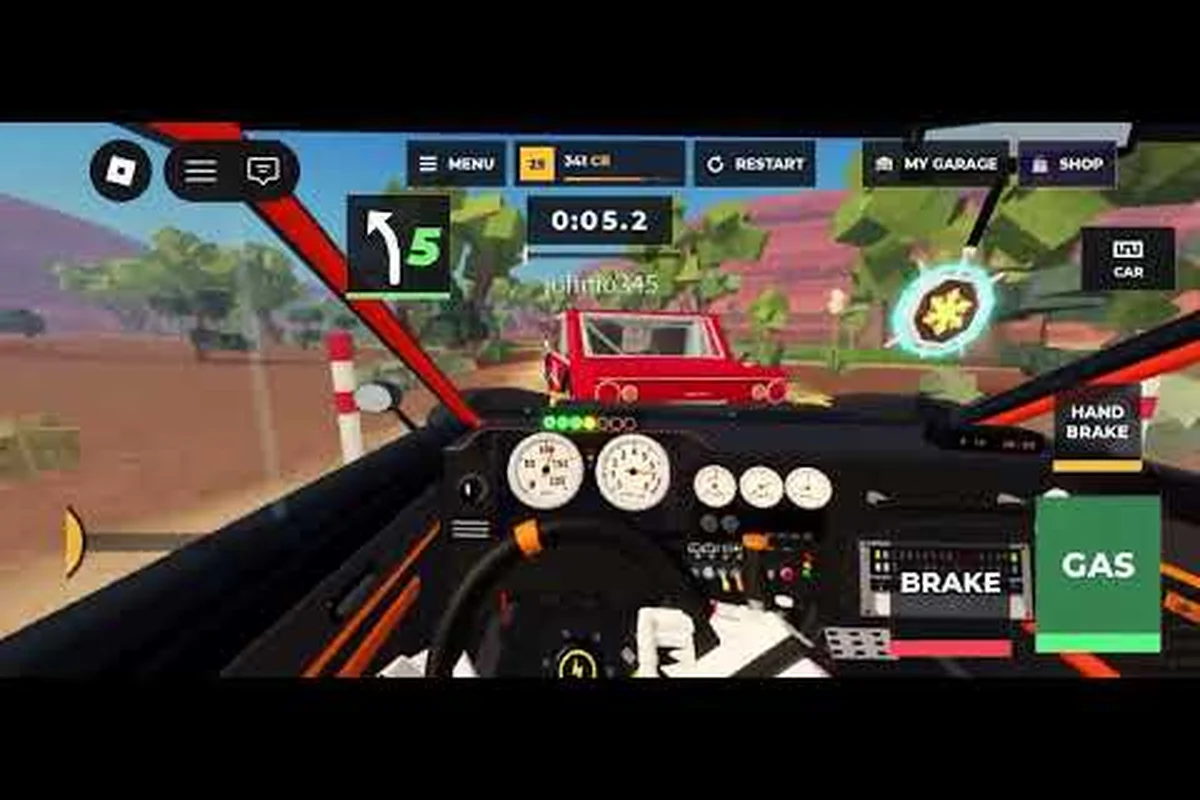
Backseat Rally all stages matter because each route tests a different mix of traction, visibility, and corner control. Use this Backseat Rally all maps overview to learn what changes between the forest, snow, and cherry blossom road before chasing cleaner times.
Backseat Rally All Stages and Map Overview
The Backseat Rally all stages collection is best understood as a series of driving tests rather than a single linear campaign. The important differences are surface grip, corner shape, visibility, and the amount of room available to correct a mistake. A driver who memorizes one route can still lose time on another because the same steering input has a different result on dirt, snow, or paved scenery.
A reliable stage list should answer three questions for every track: what conditions define it, which skills it rewards, and what causes the most common delay. That makes the guide useful both when selecting practice routes and when reviewing an unfamiliar course.
| Route group | Primary challenge | What to practice first |
|---|---|---|
| Forest routes | Tight lines and limited escape space | Early braking and precise steering |
| Snow routes | Low grip and sliding momentum | Smooth throttle and countersteer |
| Cherry blossom routes | Fast scenic sections with blind bends | Commitment, rhythm, and line choice |
| Mixed-condition routes | Changing grip across the course | Adapting car control by surface |
The table is a practical map rather than an exact in-game unlock order. Track availability and displayed sequence can vary by version, so confirm the current order in the stage selection screen before planning a full run. For route structure and progression, the Backseat Rally level and course guide provides a useful companion for organizing practice sessions.
Forest Stage Profile
The Backseat Rally forest stage emphasizes close visual reading and a controlled approach to corners. Trees, foliage, and bends reduce the amount of scenery visible beyond the immediate racing line, which makes braking points less obvious. The best approach is to identify the turn early, reduce speed before the apex, and avoid making a large steering correction once the car is already loaded with lateral force.
Forest roads also punish hesitation. A narrow entry can leave a racer with very little room if the front of the car points too far toward the inside verge. The practical goal is not to touch every corner, but to complete the sequence with stable momentum and a clean exit. Players who struggle with one section can repeat that short portion rather than restart the entire stage.
| Forest-stage signal | Likely cause | Better response |
|---|---|---|
| Understeer at entry | Entry speed too high | Brake earlier and select a wider line |
| Snap toward outer trees | Steering too abrupt | Release the wheel and reduce grip demand |
| Slow exit despite clean apex | Excess steering input | Straighten before adding power |
| Missed next bend | Visual commitment too late | Look farther down the road |
Snow and Snowy Pass Profile
The Backseat Rally snow stage belongs to a different control category because traction changes how quickly the car responds. Small steering corrections can become large movements, and a clean corner may not produce the same acceleration as dry pavement. The Backseat Rally snowy pass should therefore be treated as a balance course: retain momentum, but do not confuse speed with grip.
| Snow condition | Handling effect | Recommended input |
|---|---|---|
| Light snow | Moderate slide with usable grip | Smooth steering and early throttle |
| Packed snow | Delayed response under power | Apply acceleration in smaller amounts |
| Deep snow | Noticeable loss of momentum | Keep the line smooth and avoid abrupt inputs |
| Icy patch | Sudden grip variation | Ease off controls before the patch |
Community reports commonly describe snow stages as the least forgiving places to test aggressive tuning, though the exact feel may vary by platform and version. A balanced car is usually more useful than a car built solely for straight-line speed, because the driver must preserve the ability to correct a slide.
Backseat Rally Stage List and Surface Comparisons
Comparing the Backseat Rally stage list by surface produces a more useful practice order than simply arranging tracks by scenery. Begin with a route where you can identify the racing line, move to the snow stage to test low grip, and finish with a fast cherry blossom course. That sequence separates visual learning from control learning and helps you recognize which mistake caused the delay.
| Track type | Grip level | Visibility | Main time loss |
|---|---|---|---|
| Forest | Medium and changing | Often partially restricted | Late braking or tight entry |
| Snow | Low and variable | Usually clear but visually soft | Oversteer and excess input |
| Cherry blossom road | Medium to high | Scenic but sometimes deceptive | Carrying too little speed |
| Mountain or off-road | Uneven | Variable | Wheelspin and poor exits |
A stage list is not a guarantee that one environment always produces a faster personal time. Forest sections can feel slow but reward a precise personal best, while a fast scenic route can take longer to master because several mistakes compound. Use the table to identify the limiting factor, not merely the scenery.
Forest Versus Snow Driving
The Backseat Rally forest stage rewards precision, whereas the Backseat Rally snow stage rewards restraint. On the forest route, early braking and a clean apex often create a usable exit. On snow, braking too abruptly or steering while the tires are heavily loaded can trigger a slide, so the same input that saves time on dirt may waste several seconds on a frozen surface.
A practical comparison is to record three repeatable runs on each route. For every run, note the location of the first major brake, the first steering correction, and the slowest exit. If the first error occurs at the same corner each time, isolate that corner. If errors move around unpredictably, the problem is more likely vehicle control, braking confidence, or inconsistent throttle application.
| Test | Forest stage | Snow stage |
|---|---|---|
| Braking | Earlier, more decisive | Smoother and more progressive |
| Steering | Small at corner entry | Very small until grip is restored |
| Throttle | Apply after rotation | Feed in progressively |
| Main mistake | Cutting or clipping scenery | Overcorrecting a slide |
| Best practice focus | Line accuracy | Stability and momentum |
The winter driving reference expands on the control differences behind the snow stages and is particularly useful for players whose normal instinct is to make larger steering inputs.
Cherry Blossom Road Profile
Backseat Rally cherry blossom road uses its scenic appearance to create an interesting driving problem. The route can look smooth from a distance, yet bends and roadside features may arrive sooner than expected. Players often lose time in two ways: braking later than planned, or making an abrupt correction after committing to a faster line.
The best approach is to separate visual judgment from emotional pressure. Identify a braking reference, place the car before the turn, and use a smooth progression through the steering range. The scenery should provide memorable landmarks, not distract from the actual reference points on the road.
| Cherry blossom road feature | Racing implication | Suggested focus |
|---|---|---|
| Long scenic straight | Encourages excess speed | Hold a consistent pace |
| Partly hidden bend | Rewards early braking | Use scenery or posts as references |
| Smooth flow between corners | Rewards early rotation | Avoid unnecessary mid-corner corrections |
| Narrower roadside boundary | Limits error recovery | Keep a clean buffer |
Because route details can shift between game updates, treat player impressions as useful but provisional. As of the available community information, the cherry blossom environment is valued for attractive scenery and a more flowing rhythm, while some players still report difficulty judging certain approaches. Confirm current geometry in a short run before committing to a full time attack.
Track Order and Recommended Practice Route
A sensible track order alternates demands instead of stacking similar stages. It gives you a progression from visual learning to low-grip control and then to faster rhythm driving. The Backseat Rally all maps list becomes most useful when each run has a specific goal, such as learning one braking reference or reducing slide frequency rather than merely finishing in first place.
| Practice block | Stage | Primary goal | Suggested duration |
|---|---|---|---|
| 1 | Forest stage | Learn corners and braking references | 15–20 minutes |
| 2 | Snow stage | Control slides and throttle input | 20–25 minutes |
| 3 | Cherry blossom road | Link corners at committed speed | 15–20 minutes |
| 4 | Forest or off-road stage | Reapply lessons to mixed terrain | 15 minutes |
| 5 | Best-performing route | Combine everything into a timed run | 10–15 minutes |
The suggested durations are training recommendations, not official game values. A shorter block can be useful when a racer is actively testing one adjustment, while a longer block is better for comparing routes under similar conditions. The point of the Backseat Rally stage list is to create repeatable practice, not to turn every outing into a long grind.
Building a Repeatable Three-Run Method
Use three runs on the same route with one change at a time. The first run can establish a baseline, the second tests a specific adjustment, and the third determines whether that adjustment produced a repeatable improvement. Change only one variable because adjusting steering, braking, and racing line at the same time makes it difficult to identify what created the gain.
For a forest route, begin by recording where you brake and whether the car rotates cleanly. For a snow route, count the number of major slides and note whether the next input becomes sharper afterward. On cherry blossom road, identify the bends where speed drops most and compare your entry approach with the previous run. This approach turns vague impressions into useful player data.
The driving-line guide offers additional methods for comparing route positions, stage times, and common mistakes. Use those measurements after establishing a consistent driving rhythm, because detailed line analysis is less valuable when every run begins with a different level of control.
Backseat Rally Forest Stage Mastery
Mastering the Backseat Rally forest stage begins with reducing uncertainty. Dense scenery can hide the exit of a corner, but most slow runs are caused by changing the plan too late. Pick a visible object before the bend, brake to a speed you can hold through the turn, and use a restrained steering input that leaves room to adjust the rear of the car.
One effective method is to divide the route into short visual groups. A group might contain a braking point, one corner, and the following exit. Complete each group smoothly before thinking about the next section. This reduces the temptation to carry an inappropriate speed into a blind corner and makes errors easier to diagnose after the run.
| Error pattern | What it reveals | Correction |
|---|---|---|
| Same corner causes every mistake | Unclear reference or excessive entry speed | Select a nearer braking cue |
| Slide begins after the apex | Oversteer from abrupt steering | Unwind the wheel earlier |
| Exit is slow on every run | Early apex or excessive steering | Open the exit slightly |
| Car runs wide only in rain | Tire choice or grip mismatch | Test a more stable setup |
The forest stage rewards a repeatable line more than a dramatic entry. A slightly conservative line that opens the next corner is usually faster over a full run than an aggressive line that forces a recovery. Player experience supports this approach because the limited escape space turns small steering errors into disproportionately large time losses.
Building a Forest-Stage Braking Routine
A useful braking routine has four steps: spot the reference, release acceleration, turn while slowing, and straighten before power. The sequence matters because braking, turning, and acceleration all compete for available grip. Doing them one at a time makes the car more predictable, especially on a narrow route.
Start with a comfortable pace rather than the speed you hope to reach later. As the line becomes familiar, move the braking point slightly later by small increments. If the car begins running wide, undo the last change. The off-road stage guide is useful for comparing how a forest route responds when the surface is loose or uneven.
Snow Stage and Snowy Pass Mastery
The Backseat Rally snowy pass rewards a driver who can make small corrections without turning every movement into a crisis. Because the surface changes the relationship between steering and traction, the goal is not to remove all body movement. It is to keep the car’s response gradual and the next input appropriate for the grip that remains.
Three ideas prevent most beginner errors. First, look farther through the bend so steering corrections begin early. Second, reduce the amount of steering used during acceleration. Third, avoid changing direction and throttle at exactly the same moment, since combining those inputs can overwhelm the available grip.
| Snowy-pass variable | Effect on handling | Best adjustment |
|---|---|---|
| Steering angle | More angle increases slide risk | Use a smaller range |
| Throttle amount | Power can break rear grip | Apply power gradually |
| Braking force | Strong input may cause instability | Brake earlier and more progressively |
| Camera angle | Changes visual timing | Keep a consistent perspective |
Treat recorded personal times as the main benchmark because other drivers may use different cars, settings, and routes. The Backseat Rally snow stage can produce dramatic improvements after a player stops oversteering, but those gains usually come from smoother execution rather than a different route. Review the exact section where the run deteriorates and compare the preceding input with the same point in a cleaner run.
Diagnosing a Slide
When the rear of the car moves outward, resist the urge to turn sharply in the opposite direction. A large countersteer input can make the slide worse if the tires have little grip left. Instead, release or soften the steering, settle the car, and then apply modest throttle to maintain balance.
A slide also needs a recovery plan. If the road edge is close, protecting the vehicle from a stop may be more important than saving a fraction of the lap. On a wider section, the driver can let the car rotate and continue when there is enough room. This decision depends on visibility and road width, which is why stage-specific practice is more useful than memorizing a universal snow trick.
Cherry Blossom Road and Fast-Route Technique
The Backseat Rally cherry blossom road should be driven through rhythm rather than isolated corners. A fast route often feels easy at first because the scenery is open and the lines appear inviting. The time is lost when a driver brakes deeply for one bend, rotates slowly, and then accelerates before the car is ready for the next section.
Treat the route as a chain of braking zones and acceleration zones. Finish the previous corner with the car aligned, reach a stable speed, and identify the next reference before adding full power. This prevents the common mistake of carrying a good exit into a bend that actually requires another brake.
| Fast-route zone | Driver action | Time-saving principle |
|---|---|---|
| Before a bend | Set entry speed and gear | Avoid emergency braking |
| At the apex | Rotate once, then settle | Minimize steering corrections |
| On exit | Unwind the wheel | Prepare for acceleration |
| Between corners | Preserve momentum | Avoid unnecessary lift-off |
The scenic setting can make distance judgment harder than it appears. A familiar-looking gap may represent a much longer braking zone, especially when trees, petals, or lighting reduce visual contrast. Establish a personal reference at each questionable corner and verify the distance over several runs. That method is more dependable than trying to judge a new corner from a single pass.
Final All-Stage Performance Checklist
The Backseat Rally all stages should be approached as a connected set of skills. Forest routes develop visual precision, snow routes develop low-grip control, and cherry blossom road develops committed speed and rhythm. Improving one area often helps the others because every route rewards the same underlying habits: early decisions, smooth inputs, and a clean exit.
Before a full run, use the Backseat Rally all maps overview to choose a route that matches your current weakness. If you cannot keep the car stable, repeat the snow stage. If your exits are slow, use the forest route for turning practice. If braking is inconsistent, rehearse the cherry blossom road with a focus on references and distance.
| Final check | What good looks like |
|---|---|
| Braking | Speed is reduced before the turn |
| Steering | Inputs are smooth and progressive |
| Throttle | Power is added after the car settles |
| Racing line | Exit opens the next corner |
| Recovery | Mistakes do not trigger a larger error |
A complete stage list is only the starting point. The better result comes from identifying which environment exposes your weakest input, repeating that portion, and confirming the correction across multiple runs. That process makes the Backseat Rally stage list more than a catalogue of tracks: it becomes a practical training plan for cleaner, more consistent racing.
Frequently Asked Questions
How many stages are in Backseat Rally?
The available stage count can depend on the game version and what is included in the current release, so avoid treating a community count as permanent. Use the in-game stage selection screen as the authority for the current roster. The Backseat Rally all stages discussed here are organized by their defining surfaces and handling demands, making it easier to plan practice across forest, snow, and cherry blossom environments.
What is the hardest stage for new drivers?
The snow stage is often the most demanding for new drivers because sliding can turn a small correction into a larger error. The forest stage can also be difficult when corners are tight and the road has little escape room. Difficulty depends on the driver, car, and route experience, so compare your weakest input rather than relying on a universal ranking.
Should I practice the forest stage before the snow stage?
Yes, because forest routes are a useful place to learn early braking and clean corner entry before adding low-grip complications. Once the forest stage feels consistent, move to the snow stage and focus on smoother steering and throttle. You can then carry those habits into the cherry blossom road, where linking corners at speed becomes the central challenge.
What is the best way to improve on Cherry Blossom Road?
Focus on connecting corners through a consistent rhythm rather than attacking each bend independently. Identify braking references early, rotate the car with one controlled steering input, and straighten before applying full power. If the route feels unpredictable, use repeated runs to verify distances and establish reliable landmarks.
Can I use the same car for every stage?
A balanced car is often easier to learn because it gives you consistent responses across surfaces, but some setups may favor straight-line speed or low-grip control. The key is choosing a vehicle you can control comfortably and adjusting your driving to the environment. A familiar car that feels predictable is usually more valuable for progression than a faster car that is difficult to stabilize.