
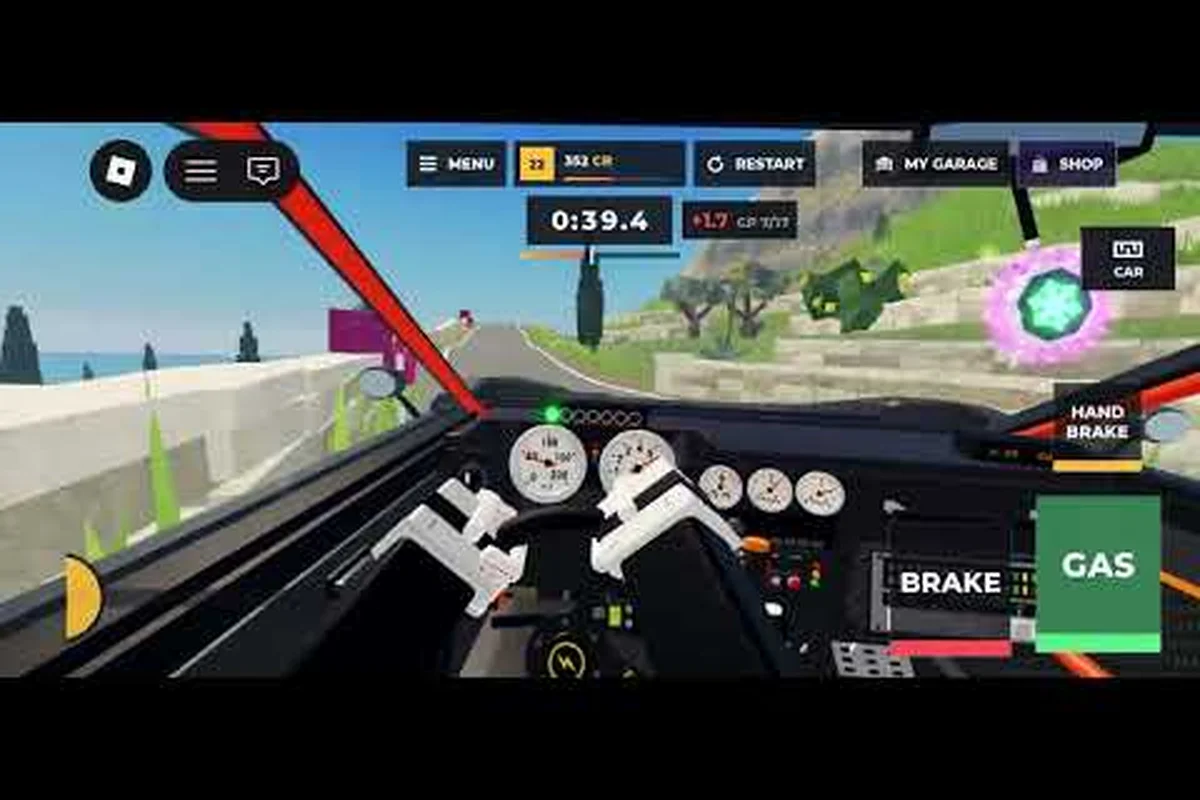
Backseat Rally’s dynamic weather changes the usable grip of each stage, so a dry-pavement setup can become unstable on rain, snow, or loose gravel. On wet surfaces, reduce cornering speed and allow more braking distance because the rear axle can break traction earlier; on snow, smooth steering inputs help prevent sudden yaw. Loose gravel rewards earlier power delivery, but wheelspin can lengthen the route and erase stage time. Terrain-specific adjustments therefore matter for preserving control, maintaining momentum, and keeping the run competitive.
Backseat Rally Dynamic Weather: Core Terrain Principles
Backseat Rally dynamic weather changes how safely and quickly a car responds to steering, braking, and acceleration. The basic goal remains consistent: place the car for the next corner before reaching the current one. What changes is the amount of space, braking, and steering input the surface allows.
Stable tire contact is the central principle. A car that remains settled can be steered predictably, while a car sliding, bouncing, or digging into a soft shoulder usually needs a gentler correction. This is especially important when a stage combines several surfaces, because entering gravel at speed may send the car toward mud, snow, or wet pavement with very little time to react.
| Surface | Primary hazard | Best early adjustment | Common mistake |
|---|---|---|---|
| Dry pavement | Overconfidence at entry speed | Brake before the turn | Braking inside the corner |
| Wet pavement | Reduced braking grip | Increase braking distance | Late or abrupt steering |
| Loose gravel | Low lateral grip and drifting | Reduce entry speed | Fighting a small slide |
| Mud | High rolling resistance and soft edges | Build momentum early | Entering without a clear line |
| Snow | Low grip and variable traction | Smooth, measured inputs | Sudden throttle or steering |
| Mixed terrain | Sudden grip changes | Choose a wider line | Treating every patch alike |
The table is a practical summary rather than a universal speed chart. The same surface can behave differently depending on the stage, camera view, car condition, and weather transition. Community experience generally favors an early, smooth correction over a late reaction because a small slide can still be recoverable when it is treated as a change of direction rather than a sudden loss of control.
A useful habit is to divide the road into three zones: the setup zone, the commitment zone, and the recovery zone. In the setup zone, choose a line and reduce speed. In the commitment zone, hold a steady steering input and avoid unnecessary brake corrections. In the recovery zone, look for a safe place to regain speed after the car settles. This mental model works on both narrow roads and broad rally stages.
The Backseat Rally weather guide expands on how changing conditions affect grip. For this article, the key point is simple: the car should remain the priority, and the clock should be managed through preparation rather than reckless speed.
Weather Icons Point, Road Surface Decides
A weather icon tells you that conditions exist, but the road surface shows where the real danger begins. Look for darker pavement, standing reflections, scattered stones, mud pulled onto the shoulder, and snow that has been compressed by earlier traffic. These visual clues help you locate the transition before the car reaches it.
Transition anticipation prevents most avoidable mistakes. A gravel patch after rain may be darker and rougher than the road, while snow can begin as a thin white edge and deepen where the road is shaded. If a corner leads into a surface change, plan to be at a controlled speed before the boundary rather than discovering the loss of grip halfway through the turn.
Community-reported driving patterns favor a simple sequence: scan, select, settle, accelerate. Scan far enough ahead to identify the surface, select a line that avoids deep ruts and soft shoulders, settle the car before the apex, and accelerate only when the front end points where you want it to go.
Backseat Rally Terrain Guide: Dry, Wet, and Loose Ground
The Backseat Rally terrain guide should begin with the distinction between trail surface and weather intensity. Rain does more than make a road shiny; it can fill the spaces between gravel, loosen soil, and conceal ruts. Snow can cover a hard road or sit over soft ground. The visual surface may look uniform while the mechanical grip changes underneath.
On dry pavement, use the road’s edges and braking zones to build a rhythm. On wet pavement, preserve more room before the turn and avoid hard initial braking. On gravel, use smooth steering and let the car rotate gradually. These changes should be made early enough that the rest of the stage remains drivable.
Dry Pavement: Preserve a Clean Exit
Dry pavement provides the clearest feedback, which makes it a good place to establish a controlled baseline. If the car responds sharply to steering and stops predictably, you can shorten braking distance slightly. If the car already feels loose, keep the same conservative approach used in rain or snow.
A dry road also exposes poor technique because there is less forgiveness. Sudden brake inputs can transfer weight forward and unsettle the car, while abrupt throttle can create a brief loss of traction. Smooth inputs preserve the balance of the car and make the next corner easier to read.
| Dry-surface checkpoint | Driver action | Result |
|---|---|---|
| Before a fast bend | Set the line early | Fewer mid-corner corrections |
| During braking | Release brake progressively | Better weight balance |
| At corner exit | Add power only after the car settles | Cleaner acceleration |
| On a narrow road | Avoid abrupt steering | Less chance of a snap |
For stages that mix sealed and unpaved surfaces, the Backseat Rally driving line guide offers a useful way to think about entry placement and corner exit. The weather-specific addition is to assume that grip will fall whenever the tires leave the smooth road.
Rain: Change the Braking Point
Rain reduces the amount of friction available for braking, and standing water can create a sharp grip boundary. The practical response is to increase braking distance and make the initial pressure more progressive. If the wheels begin to lock or the car slides in a straight line, easing off the brake often restores control faster than holding the input.
Early braking in rain is more reliable than emergency braking because a locked wheel cannot follow the steering. Look for drainage clues, a darker surface, or a reflective area as signs that water may be deeper. Those sections deserve a lower entry speed and a straighter approach, especially if the road bends at the same time.
The Backseat Rally rain route is not simply the wet version of a dry route. On a rain route, prioritize exits that lead onto reliable grip. A route may be technically longer or less direct, but it can be more dependable if it avoids mud, deep water, and abrupt surface changes.
Gravel: Let the Car Move Instead of Fighting It
Loose gravel needs a different rhythm. The tires may continue traveling forward while the car rotates slightly, so a sudden steering correction can increase the movement. Gentle inputs help the vehicle settle into the slide, while a lower entry speed reduces the distance required to bring it back on line.
For a stable gravel pass, brake before the loosest section, select a path through the firmest material, and keep the steering input modest through the first part of the turn. Accelerate gradually when the nose points toward the exit. If the rear moves wide, avoid adding sudden steering in the opposite direction; stabilize first and let the car complete its rotation.
The Backseat Rally gravel guide should also account for ruts. A rut can guide the car, but only if the tires enter it in a controlled attitude. Hitting it at an angle can produce a sharp kick. The Backseat Rally off road tips that matter most are therefore patience, gradual power, and avoiding abrupt changes in direction.
Backseat Rally Off Road Tips for Mud, Ruts, and Narrow Sections
Off-road stages punish imprecise planning because a small mistake has more consequences than a brief loss of time. Mud adds rolling resistance, ruts create sudden directional changes, and narrow shoulders leave little room for correction. The solution is not simply to drive more slowly; it is to spend speed only where the car can safely use it.
Line choice is the most valuable off-road decision. Prefer a line that remains continuous rather than one that crosses multiple soft patches. A slightly wider route may preserve momentum better than a shorter route through mud. If a rut runs parallel to the road, following it can be useful, but crossing it diagonally can unsettle the suspension.
| Obstacle | Pre-entry decision | Control technique | Recovery priority |
|---|---|---|---|
| Soft muddy shoulder | Keep tires on firmer ground | Light throttle and smooth steering | Preserve a straight exit |
| Deep rut | Match the car to its angle | Cross gradually and evenly | Avoid sudden weight transfer |
| Standing water | Choose a shallower path if visible | Keep inputs smooth | Do not force a hard turn |
| Loose bank | Give the tires room to climb | Build speed before the crest | Keep the car centered |
| Narrow gap | Plan one complete line | Slow for clearance, not panic | Set straight before accelerating |
A useful off-road routine is to look at the entire obstacle before selecting a line. The visible entry may be forgiving while the exit is blocked by a rut, rock, or drop. Scanning beyond the first feature prevents a common mistake: entering a mud section without enough room to regain traction afterward.
Control the Slide, Then Reclaim Speed
When the car loses grip, begin by reducing the magnitude of the correction. Steering sharply while the tires are sliding can increase the angle of movement, whereas a small correction allows the car to find traction again. On mud and loose ground, throttle should be used as a control input rather than an abrupt demand for speed.
This method is particularly useful in the Backseat Rally dynamic weather because a storm can move the stage from wet pavement to soft ground and back again. The driver who is already balanced when the surface changes has more time to react. The driver who is already sliding has less.
| Slide stage | What the driver sees | Best action |
|---|---|---|
| Initial movement | Car points slightly away from the turn | Ease off steering and brake pressure |
| Developing slide | Rear travels wider than the nose | Hold a small, stable correction |
| Tire regrip | Car begins moving with the surface | Add gradual throttle |
| Exit | Car aligns with the next section | Build speed smoothly |
The objective is not to eliminate every slide. A small gravel slide can be harmless if it is managed, while a large slide often indicates that entry speed was too high. Judge the movement by stability, available space, and whether the car can still reach the intended exit.
Corner Exit and Recovery Terrain
A stage does not end when the steering straightens. Look at the road immediately after the corner because loose material or a narrowing shoulder can undo a good turn. Prioritize a clean exit over a dramatic acceleration, especially where the next section begins with another surface change.
On an off-road stage, a slightly conservative corner can preserve a larger speed range for the next kilometer. For a practical example, entering a long bend ten percent slower may allow earlier throttle on the exit. Entering it at maximum speed may produce a short, sliding lap segment but leave the car with no reserve for the rough section ahead. The Backseat Rally off-road stage overview provides more context on balancing route conditions and stage demands.
Momentum reserves are the difference between a controlled run and a string of recoveries. Avoid using every available unit of grip before the next known hazard. On fast forest roads, that reserve can be the margin that keeps the car away from mud, while on a technical mountain section it can be the margin that prevents a rut from becoming a wall.
Backseat Rally Snow Route: Finding Traction Without False Confidence
Snow reduces grip, hides road edges, and makes braking distances longer. It can also make a stage look deceptively smooth because tire tracks and compacted snow may create a clearer path than the surrounding surface. The Backseat Rally snow route should be handled as a changing surface, not a single uniform condition.
Compacted tracks often offer better grip than untouched snow, but that advantage can disappear around a bend. A vehicle may follow a previous track with four tires and then cross to a softer bank as the road curves. Keep the visual line slightly ahead of the immediate path so that adjustments happen before the front wheels leave the useful surface.
Use Snow Cues Before Grip Vanishes
Look for exposed pavement, darker ice, snow banks, and ruts that channel the car. A clean white road is not automatically the safest line. Old tire tracks can be deeper than they appear, particularly where the snow has refrozen around the grooves.
| Snow feature | Likely effect | Recommended response |
|---|---|---|
| Compacted tire track | More support, but may end suddenly | Follow while checking farther ahead |
| Deep white snow | Higher rolling resistance | Use a smooth, continuous line |
| Refrozen rut | Sharp directional pull | Avoid crossing at an angle |
| Exposed ice patch | Very low friction | Reduce speed before entering |
| Meltwater at road edge | Wet, slippery transition | Keep clear of the edge |
The best snow technique is smoothness. Brake before the bend, avoid abrupt steering, and use moderate throttle. Harsh inputs can disturb the car without producing useful movement, especially if the tires are already sliding. A well-placed input may feel slow at first, but it helps the vehicle remain balanced enough to accelerate again.
Snow, Gravel, and Packed-Road Transitions
A Backseat Rally snow route may cross a plowed road that looks safe before the next section becomes loose. The transition deserves its own braking point. As the grip changes, adjust the line toward firmer ground and accept a slightly longer route if it avoids a patch with no recovery room.
The Backseat Rally winter driving guide is useful for additional cold-weather comparisons. In the context of the Backseat Rally dynamic weather, the central rule is that snow rewards anticipation: reach the difficult surface with a settled car, because steering corrections made after traction has already collapsed are far less effective.
| Situation | What usually happens | Better choice |
|---|---|---|
| Entering snow at high speed | Long slide or weak steering response | Brake earlier and follow a track |
| Reaching a clear road through snow | Sudden grip increase | Keep the car straight and re-center |
| Crossing a shaded icy patch | Reduced braking and lateral grip | Avoid the patch if possible |
| Accelerating out of a rut | Wheelspin and reduced direction | Apply power progressively |
Carry Less Speed Through Blind Sections
Snow limits sight distance because road features blend into the surroundings. Reduce speed before the point where the road disappears, not after the car reaches the unseen section. This preserves options if the bend is sharper, the road is narrower, or a vehicle has already left a deep track.
A strong snow line keeps the car close to proven traction while leaving enough room to react. When the path is uncertain, avoid sudden direction changes. The objective is to gather usable information from the surface, then commit to a line that can be completed at the current speed.
Backseat Rally Rain Route and Weather Strategy
The Backseat Rally rain route depends on more than low grip. Rain creates reflections, dark patches, pooled water, mud transfer, and changing braking zones. Drivers need to recognize the order of those effects because a shiny road can be followed by loose gravel, which can then lead into soft mud.
Surface hierarchy is useful on wet stages. Hard pavement generally offers more predictable braking than gravel, while a flooded section may offer less grip than either. Mud near the shoulder can drag the car outward even when the main road remains firm. A route that stays on clear pavement may be longer, but it is often easier to drive consistently.
Build a Rain Checklist for Every Stage
Start each rain attempt by checking the first 100 to 200 meters of road. Look for standing water, shiny sections, gravel deposits, mud at the edges, and places where the road changes elevation. This scan is not a reason to stop; it is a chance to choose the first corner with extra space.
Use the checklist as a live decision loop during a backseat rally rain route: compare each surface with the previous 100 to 200 meters, note where drainage fails, and mark alternate lines before visibility or road angle changes. If a gravel patch appears after a wet corner, avoid sudden steering corrections; if standing water develops near an elevation change, treat the exit as more hazardous than the entry. This staged read helps the driver preserve momentum without confusing temporary grip with a reliable line.
-
Increase the braking zone before the first wet turn.
-
Keep the car in a lane with visible drainage.
-
Cross pooled water as straight as possible.
-
Avoid painted markings that may cover a slippery line.
-
Check the shoulder for mud before using it as an escape line.
-
Reduce speed again when the road returns to dry pavement, because drivers often relax too early.
The final item is easy to overlook. Dry-road relief can create overconfidence: the tires regain grip, the steering becomes more responsive, and a turn that was cautious in the rain may be treated casually. A rain route should retain a margin of caution until several clean sections confirm that conditions have genuinely improved.
Mud Transfer Changes the Next Corner
Mud carried onto the tires can make a paved section behave less predictably. Inspect the road after crossing a muddy verge, and give the first bend more room because grip may have changed. The same rule applies when gravel is dragged onto a sealed road, although the effect usually develops differently.
Use a steady lane rather than weaving. The car needs time for tires to shed residue and regain a stable relationship with the road. If a puddle has covered a pothole or depression, a straight crossing at controlled speed is usually safer than trying to adjust around an unknown obstacle.
Race the Clock Without Racing the Surface
The fastest rain run is not the run with the most aggressive inputs. It is the run that loses the least time to spins, wall contact, and unnecessary corrections. A slightly lower corner-entry speed can preserve a smoother exit and keep the car in position for the next stage sector.
| Rain mistake | Time lost | Better habit |
|---|---|---|
| Braking at the last moment | Longer slide or missed apex | Move braking earlier |
| Entering a puddle at an angle | Sudden correction | Keep the crossing straight |
| Treating mud as a hard shoulder | Loss of grip and route | Follow the firmest line |
| Accelerating on dry exit too soon | Confidence grows before conditions do | Resume speed gradually |
| Chasing an immediate recovery | One correction becomes two | Stabilize, then reposition |
Weather strategy also includes deciding when to restart. If the car is barely moving, pointed into a barrier, or far outside the ideal line, a clean restart may be faster than a prolonged recovery. The useful threshold is not the amount of time already lost; it is the number of errors required to regain a normal stage rhythm.
Integrating Dynamic Weather Into Every Stage Attempt
Backseat Rally dynamic weather becomes manageable when the driver treats each stage as a chain of connected surfaces. A wet corner leads to gravel, gravel leads to mud, and mud may return to a snowy road. The objective is to preserve the car’s balance and preserve information about the road ahead.
Pre-Stage Preparation Checklist
Before the stage begins, review the route and identify likely transition points. If the stage has a clear weather label, still inspect the road because a forecast cannot mark every puddle or rut. Pay special attention to shaded areas, low points, forest edges, and narrow cuts where moisture or loose material tends to collect.
| Preparation stage | What to check | Time-saving purpose |
|---|---|---|
| Route scan | Weather label and surface changes | Avoid surprise grip loss |
| First-corner plan | Braking zone and escape room | Establish a safe rhythm |
| Mid-stage scan | Gravel, mud, ice, and water | Enter transitions at a controlled speed |
| Final-sector plan | Exit conditions and stopping area | Prevent a late mistake |
| Post-run review | First error and its cause | Improve the next attempt |
Community experience suggests that the most useful review is not a judgment of the entire run. Identify the first moment when the car behaved differently from the plan. If it occurred at a wet-to-gravel transition, adjust the transition point next time. If it occurred after a mud section, reduce the speed of the first corner on the paved road that follows.
Drive by Surface Groups
Group nearby conditions into a single mental mode. Dry pavement is controlled and precise; rain pavement is smoother and more forgiving during entry; gravel is best managed through gradual inputs; mud requires continuous momentum; snow rewards an even, tracking line. Switching too often between behaviors causes unnecessary corrections.
Surface grouping makes the car easier to understand. If the road is mostly dry with one short gravel patch, the goal is to enter it slowly and resume the dry-road rhythm afterward. If gravel covers the whole stage, allow more movement and avoid a rigid dry-road steering pattern.
For deeper comparisons of changing grip, the Backseat Rally mud route guide focuses on the way soft ground changes momentum and line choice. These ideas combine well with weather strategy because mud often becomes the next obstacle after a wet approach.
Reset When Recovery Tasks Stack Up
A reset becomes sensible when the current attempt creates a chain of recovery tasks. Examples include missing the intended road, becoming wedged against a barrier, or repeatedly losing the same muddy corner without improving the approach. Continuing after that point usually adds time without producing better information.
Before resetting, check the attempt’s recovery chain: a missed road junction, a barrier scrape that leaves the car on two wheels, or three muddy-corner attempts with nearly identical lines. If the route is no longer improving, the run has shifted from learning the surface to repeating a mistake; on a rain route, for example, a wet gravel entry can turn each retry into a fresh ruts-and-pool problem.
-
Identify the first error, not the final error.
-
Choose a more conservative entry for that location.
-
Plan the transition two corners earlier.
-
Keep a wider line if the shoulder is soft.
-
Avoid accelerating until the car is fully aligned.
-
Carry less momentum into blind or heavily pooled sections.
Frequently Asked Questions
What is the most important skill in Backseat Rally dynamic weather?
Reading transitions before entering them is the most important skill. Knowing where wet pavement becomes gravel, where mud crosses a road, or where snow ends lets you adjust speed before grip disappears. This reduces slides, wall contact, and repeated recovery attempts, especially when a Backseat Rally route contains several different surfaces in quick succession.
How should I drive on a Backseat Rally snow route?
Use smooth steering, gradual throttle, and earlier braking. Follow compacted tracks when they provide a continuous line, but check farther ahead because a track can end near a bend. Avoid crossing frozen ruts at an angle, and reduce speed before exposed ice or sections where the packed surface becomes deep, uneven snow.
Are gravel sections faster to take slowly?
They are often faster over a complete stage when a slow entry prevents a slide. A controlled gravel corner lets the car settle and accelerate cleanly afterward, while an aggressive entry can create a long rotation, a wide exit, and time lost correcting the mistake. The goal is to preserve enough grip for the next corner, not merely to minimize time in the current one.
What is the best approach for a Backseat Rally rain route?
Brake earlier than on a dry road and cross standing water as straight as possible. Keep the car on a line with visible drainage, and watch for mud transferred onto the pavement. After the weather improves, avoid accelerating too quickly; dry pavement restores response sooner than drivers often expect, so the first clean corner should still be approached with a small safety margin.
Should I restart after making a mistake in mixed weather?
Restart when the mistake breaks your rhythm or leaves the car facing a worse position, not simply because one corner was slow. If you can stabilize the car and complete the next section cleanly, continuing may preserve time. If the same error is likely to repeat, reset and approach the first problematic surface with an earlier brake point and a more forgiving line.