
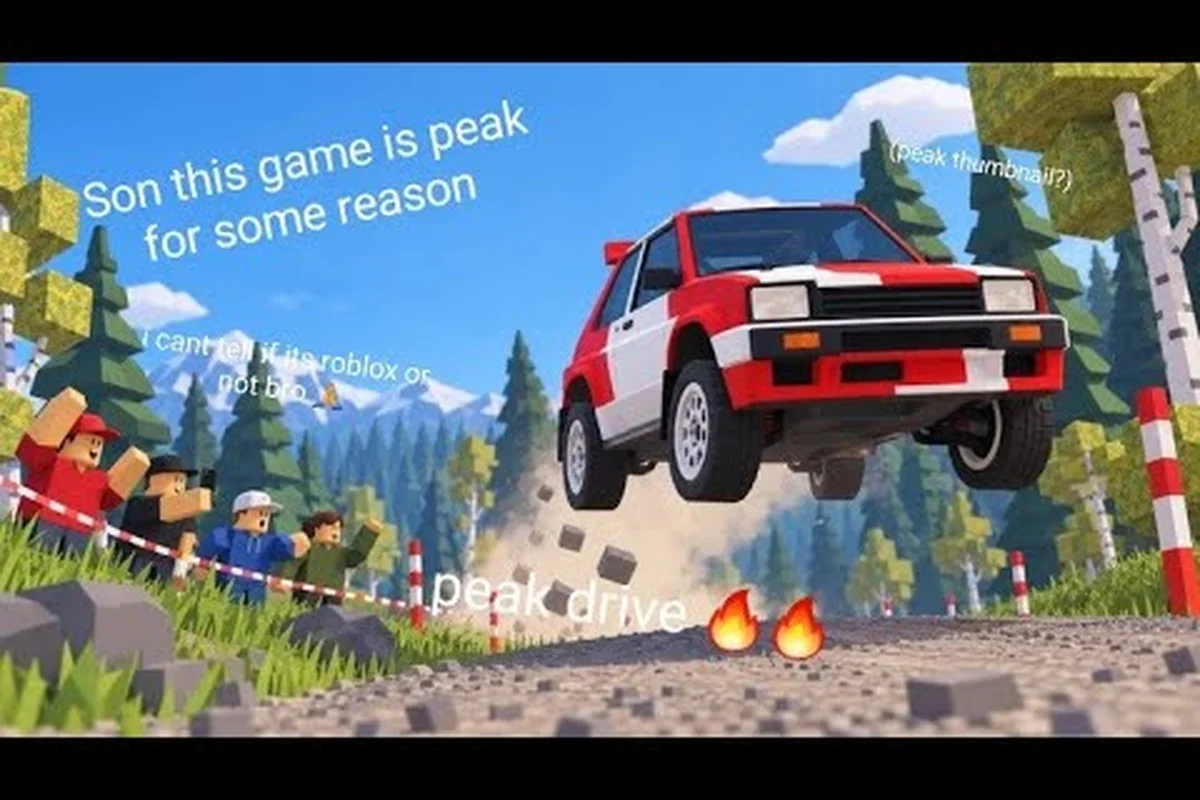
The Backseat Rally mud route rewards patience, precise steering, and disciplined braking because every avoidable slide costs tenths. Learn the grip-saving lines, gold-time targets, and weather adaptations that turn a wet stage into a controlled run.
Backseat Rally Mud Route: What Makes It Difficult?
The Backseat Rally mud route is not simply a slower version of a dry rally stage. Mud changes the available traction, lengthens braking distances, and makes abrupt steering inputs expensive. The car may still follow the intended path, but acceleration, rotation, and stopping behavior become less predictable. A clean-looking line can therefore be slower than a cautious one.
Successful runs rely on three linked decisions: choosing a line that preserves grip, releasing or reducing inputs before the car loses control, and committing to the exit without creating a second correction. The goal is not to drive as slowly as possible. It is to keep the car balanced while maintaining enough momentum to pass the mud route’s time targets.
Core Route Variables
| Route variable | Why it matters | Practical response |
|---|---|---|
| Surface depth | Deeper mud offers less resistance and more drag | Keep the car on firmer edges where the racing line allows |
| Corner exit | A spinning wheel or early throttle input can break traction | Straighten the car before adding power |
| Braking zone | Wet ground increases stopping distance | Begin slowing earlier than on dry pavement |
| Visibility | Rain and spray can hide ruts or surface changes | Use a slower reference speed on the first pass |
| Tire condition | Wear changes how sharply the car responds | Save aggressive inputs for earlier corners |
These variables explain why a single generic speed rule does not work. The Backseat Rally best weather conditions are those that let you read the surface and make smooth corrections. A route that is technically dry but covered in loose gravel may demand a different rhythm from a muddy section with stronger roadside definition.
The Grip-Saving Principle
A grip-saving line uses the available road surface to reduce the amount of correction the car needs. On a broad muddy bend, that often means avoiding the deepest central strip. The outer edge may be firmer, allowing the car to turn with less steering lock and less sliding. This is not a rule to follow everywhere, because a firm edge can quickly become a barrier, ditch, or loose verge.
The useful habit is to scan the entire corner before selecting the entry. Look for a darker, smoother, or more continuous surface and use it as the reference. A muddy route can have several viable lines, but only one will fit your current speed and the road’s width. The Backseat Rally stage-weather guide explains how changing stages alter the visual and physical demands of each surface.
Mud Route Quick Targets
| Target | What it means | How to achieve it |
|---|---|---|
| Gold time | Run target for a stage medal | Preserve momentum without repeated slides |
| Clean line | Continuous direction with minimal corrections | Choose a surface that resists the car’s natural slide |
| Safe braking point | Latest point that still allows controlled stopping | Use conservative inputs on a first run |
| Stable exit | Car points toward the next corner when power returns | Straighten the wheels before accelerating |
Backseat Rally Mud Handling: Choose the Right Line
Mud handling becomes much easier when the line is chosen before the car reaches the corner. Trying to discover grip while already turning forces a reaction, and reaction is usually slower than planning. On the Backseat Rally mud route, scan the road at least one bend ahead and identify the firmest continuous path.
The central line is not automatically correct. Deep ruts can pull the car inward, while a smooth outer strip may offer more grip. If the road is narrow, remain within the usable surface rather than chasing a dry-looking edge that ends in grass. A clean, slightly wider line will usually beat a technically tighter line that destroys speed.
Reading Three Surface Types
| Surface cue | Likely behavior | Line selection |
|---|---|---|
| Smooth and continuous | Better grip, though still weather-affected | Carry speed if the corner permits |
| Dark, uneven, or rutted | Lower grip and possible wheel track | Use the edge and reduce entry speed |
| Loose gravel beside mud | Variable grip and sharp edges | Avoid abrupt transitions between surfaces |
A transition from mud to gravel can unsettle the car because the tires meet resistance at different moments. Cross it with the car reasonably straight, and do not make a large steering correction while the front axle is crossing the boundary. This is especially important if rain has filled the ruts and made the surface appear smoother than it feels.
Corner Entry Techniques
The first rule of a mud corner is to make one deliberate turn rather than several tiny corrections. Small corrections can become a constant sawing motion, which repeatedly shifts the car’s balance and reduces usable grip. If the front begins to slide, straighten slightly and allow the car to regain direction before turning again.
A second rule is to separate steering and acceleration. Turning the wheel sharply while adding power increases the chance that the car will rotate or understeer beyond the intended path. In many cases, carrying a little momentum through the initial turn is better than trying to drag the car around with throttle. For broader explanations of low-grip inputs, see the Backseat Rally weather guide.
Entry Speed by Corner Type
| Corner type | Entry priority | Recommended action |
|---|---|---|
| Tight and constant-radius | Control | Brake before the turn and keep the steering input smooth |
| Long sweeping bend | Momentum | Carry a controlled speed and avoid crossing ruts |
| Change-of-direction | Balance | Straighten between bends before adding power |
| Narrow rutted passage | Placement | Follow the clearest continuous rut without wandering |
These recommendations are based on the handling behavior players report in wet stages; exact times and medal thresholds may vary by version and difficulty. The practical lesson stays consistent: grip management is more valuable than a dramatic slide followed by a recovery.
Backseat Rally Rain Handling: Brake Earlier and Read the Road
Rain handling begins with the realization that the braking distance you used on a dry stage is no longer a safe reference. Water reduces the amount of grip available when the tires need to stop or change direction, and deeper ruts can briefly redirect the car even when the brake pressure remains consistent.
A practical Backseat Rally weather strategy is to build braking zones around high-risk features. These include the entrance to a tight bend, a crest where visibility is limited, a junction with loose gravel, and a corner that follows a long straight. Braking before these points gives the car time to settle, whereas waiting until the steering input makes every correction more severe.
Rain and Mud Compared
| Condition | Main concern | Driver response |
|---|---|---|
| Light rain on solid road | Reduced braking grip | Brake earlier and avoid a late steering input |
| Heavy rain on paved road | Lower visibility and longer stopping distance | Use a lower reference speed and watch the racing line |
| Rain-filled mud | Ruts, drag, and limited escape space | Choose continuous surface and keep momentum modest |
| Rain over loose gravel | Sudden loss of traction | Cross the surface with minimal steering corrections |
Light rain is often easier to manage than heavy rain because the surface remains visually consistent. Once water collects in mud, the deeper parts may look calm even though they offer much less grip. The driver’s job is to identify the line that the water has not turned into a trap.
Building a Reliable Braking Zone
Use a three-part routine: identify the hazard, select a stopping point, and verify the car’s balance. The hazard may be a bend, crest, or surface change. The stopping point should be early enough that you can complete the braking without emergency steering. Verification means checking that the car is pointed where you want it to travel before entering the corner.
| Braking phase | Driver action | Purpose |
|---|---|---|
| Approach | Reduce throttle and choose the intended line | Prepare before traction becomes critical |
| Initial braking | Apply smooth, sustained pressure | Avoid abrupt front-end loading |
| Before turn-in | Release or reduce braking | Restore steering response |
| Exit | Straighten, then add power | Prevent wheelspin from compounding the slide |
This routine is especially valuable while learning the Backseat Rally mud route. Repetition builds a reliable entry speed, and a reliable entry speed is what allows you to attack the corners more precisely later.
Visibility and the First Pass
Rain can hide the edge of the road or make a rut look like a safe channel. On a first run, slow down specifically where visibility is poor, even if you know the route from another attempt. Once you know where the edges lie, you can carry more speed through blind sections without relying on visual guesswork.
The Backseat Rally best weather conditions remain valuable for a reason: stable conditions make it easier to identify whether lost time came from the line, the braking point, or the car setup. If every attempt feels different, a calmer stage is better for learning than trying to force a fast run through constant rain.
Backseat Rally Snow Handling: Use Momentum Without Overcommitting
Snow handling differs from mud handling because the surface can be more uniform but also less communicative. Packed snow may allow the car to slide smoothly, while fresh snow or ice hides sharp grip changes. The driver must therefore use gentle inputs and avoid sudden steering corrections that could redirect the car across the road.
The Backseat Rally snow handling approach is to preserve a stable, straight trajectory. Snow can make a mistake look harmless for a moment, but the car often continues in the direction of its momentum. A controlled line is more important than an immediate attempt to correct every small deviation.
Snow Surface Comparison
| Snow condition | Expected response | Best adjustment |
|---|---|---|
| Packed, even snow | Gradual sliding with limited warning | Reduce entry speed and use smooth steering |
| Fresh snow | More resistance and softer surface cues | Keep momentum moderate and avoid abrupt inputs |
| Ice patch | Sudden, very low grip | Brake before the patch and avoid the center if possible |
| Snow over mud | Variable grip and hidden ruts | Choose a firm edge and cross transitions slowly |
If a stage shifts from rain to snow, the grip balance can change even when the route looks similar. The Backseat Rally winter-driving reference provides a focused look at the specific decisions that matter when the road surface becomes white, compacted, or icy.
Car Position in Snow
A slightly straighter position can make a snowy corner easier to manage. A sharp angle creates more sideways movement, and any ruts beneath the car may pull the tires in different directions. When the road is wide, use that room to keep the car settled rather than constantly adjusting the wheel.
The car should not be allowed to sit at a permanent angle, however. If the front is pointing well outside the corner, a small correction can become a large correction. Ease the car back toward the intended direction and wait for the grip to return before steering fully.
Exiting a Snow Corner Cleanly
-
Confirm the car is pointing toward the road’s exit.
-
Reduce steering before adding more throttle.
-
Avoid abrupt power if the rear begins to move.
-
Use wider runoff space when the corner allows it.
-
Treat ice patches as braking zones, not steering challenges.
This checklist turns a vague instruction such as “be careful” into concrete actions. It also makes the difference between a recovered slide and a lost run easier to understand: recovery may preserve the route, but it almost always costs time that a clean line would not have spent.
Backseat Rally Mud Route: A Gold-Time Run Plan
A repeatable run plan is more valuable than one isolated fast lap. Begin with a clean, cautious lap that prioritizes the route’s three most expensive mistakes: late braking, mid-corner acceleration, and unnecessary line changes. Note each mistake’s location, then improve one at a time.
The Backseat Rally mud route should be treated as a sequence of linked zones. A cautious corner exit gives you more room for the next braking zone. A clean approach to the next corner preserves tires and reduces the need to correct. Gold time comes from this continuity, not from finding one dramatic shortcut.
Stage Run Sequence
| Run | Main objective | What to record |
|---|---|---|
| First reconnaissance run | Learn the usable surface and blind sections | Braking points, ruts, recovery areas |
| Second run | Establish a smooth rhythm | Steering corrections and corner exits |
| Third run | Increase speed at proven locations | Time lost at each major zone |
| Medal run | Commit to the best balanced route | Whether mistakes occur before or after corners |
Do not increase speed everywhere after a good lap. Identify the specific zone where the car was cautious, then test a modest increase there. If the new entry causes a slide or a wider line, return to the earlier reference speed. A controlled time is easier to improve than a run full of recovery.
Gold Medal Time Targets
| Target category | Time range | Performance standard |
|---|---|---|
| Gold medal | Stage-specific target | The target defined by the current stage and difficulty |
| Podium-level consistency | Within roughly one to two seconds of target | Few major errors and no repeated spins |
| Clean run | Any time that feels smooth and controlled | Minimal corrections, stable exits, and no off-road excursions |
The exact gold medal time must be checked in the current game interface because stage and difficulty can change the target. Avoid publishing or trusting an unofficial number that lacks a current in-game reference. The dependable target is the one shown on the stage briefing screen.
Where Time Is Usually Lost
| Time-loss source | Why it hurts | Correction |
|---|---|---|
| Late braking | Leaves no room to settle the car | Move the braking point earlier |
| Mid-corner throttle | Breaks traction and widens the line | Delay power until the car is straight |
| Rut-to-edge transition | Causes a sudden change in grip | Cross the boundary with less steering |
| Panic correction | Amplifies the original slide | Smallen the correction and recover direction |
The Backseat Rally weather strategy should be adjusted according to the condition causing the error. Mud calls for line selection and momentum control. Rain calls for earlier braking and visibility management. Snow calls for smoother, more anticipatory inputs. Treating every condition as “just be slower” wastes useful information.
Backseat Rally Weather Strategy: Replay and Diagnose the Run
The fastest improvement comes from diagnosing one repeatable problem at a time. Record the run, identify the first moment the car loses balance, and determine whether the cause was the chosen line, the entry speed, or an input made too late. The first mistake is usually the most useful because later errors often come from its consequences.
A replay also separates control problems from route problems. If the car reaches the same corner with the same speed but takes a different line, compare the surface. If the speed is higher but the result is worse, return to the proven entry. This method makes Backseat Rally mud handling more systematic and prevents random changes from erasing good progress.
Condition-Specific Adjustment Matrix
| Surface | Braking | Corner entry | Acceleration | Main priority |
|---|---|---|---|---|
| Dry | Late brake possible | Carry speed if stable | Apply on exit | Maintain momentum |
| Rain | Brake earlier | Reduce entry speed | Delay until straight | Preserve stopping room |
| Mud | Brake on firm surface | Choose a continuous line | Add power gently | Avoid ruts and wheelspin |
| Snow | Brake before ice | Keep the car settled | Use smooth input | Maintain directional stability |
Use this matrix as a starting point, not a substitute for observing the stage. The same surface can behave differently depending on depth, road width, and the location of the racing line. A player report may describe the general tendency, but only the car in front of you confirms the exact response.
Building a Personal Weather Strategy
A strong personal strategy has three layers. First, memorize the surface changes and their likely effects. Second, establish a safe reference lap with a clear braking plan. Third, progressively release speed at one location per attempt. This layered approach works well because it keeps changes measurable instead of turning the whole route into a fresh experiment.
The Backseat Rally dynamic-weather analysis can help frame how route surfaces change between attempts. For mud specifically, the critical question is not whether the stage contains mud; it is where the mud is deep, where it is firm, and where the car can straighten before power returns.
Before, During, and After the Run
| Phase | Action | Purpose |
|---|---|---|
| Before | Check conditions, medal target, and vehicle state | Establish a clear benchmark |
| During | Follow the planned line and record the first error | Prevent cascading mistakes |
| After | Review the earliest costly error | Focus the next attempt on one change |
| Between runs | Rest the car and confirm the target | Preserve performance and clarity |
First error analysis is the most important part of this routine. A spin near the end may look dramatic, but correcting an earlier poor exit could prevent the entire chain. The goal of each attempt is to make the earlier part of the route cleaner.
Frequently Asked Questions
What is the best line for the Backseat Rally mud route?
The best line usually follows the firmest continuous surface rather than the deepest center of the road. Look for a smoother edge that allows gentle steering, but remain inside the usable road boundary. Scan ahead, enter with controlled speed, and straighten the car before adding power. The ideal line depends on the exact corner and visible ruts.
How much earlier should I brake in the rain?
Brake earlier than you would on a dry surface because wet pavement and muddy ruts can increase stopping distance. Choose a braking zone that leaves room to settle the car before turn-in, then reduce the brake before making a large steering input. A conservative first pass helps you identify the correct zone before you attempt gold medal pace.
Can mud be faster than rain on the same stage?
Yes, because mud can provide clearer visual guidance and a defined surface even when traction is poor. Rain may reduce visibility and create smooth-looking patches that hide ruts. The better condition depends on the route: heavy rain benefits from caution, while muddy sections reward a clear line, modest momentum, and patient acceleration.
Should I use the same technique for snow and mud?
Use a smooth, controlled approach for both, but prioritize different details. In mud, choose a continuous line and prevent wheelspin. In snow, keep the car straighter and anticipate weaker grip, especially around ice. The Backseat Rally condition guide can clarify how each condition changes available traction.
How do I improve a gold medal time on a wet stage?
Improve the first costly mistake instead of changing every corner at once. Compare replays, identify whether the problem was braking, line choice, or acceleration, and adjust one location per run. Preserve the entries that already work, then release a little more speed at the proven weak point. Consistency usually creates a larger gain than a brief burst of aggression.