
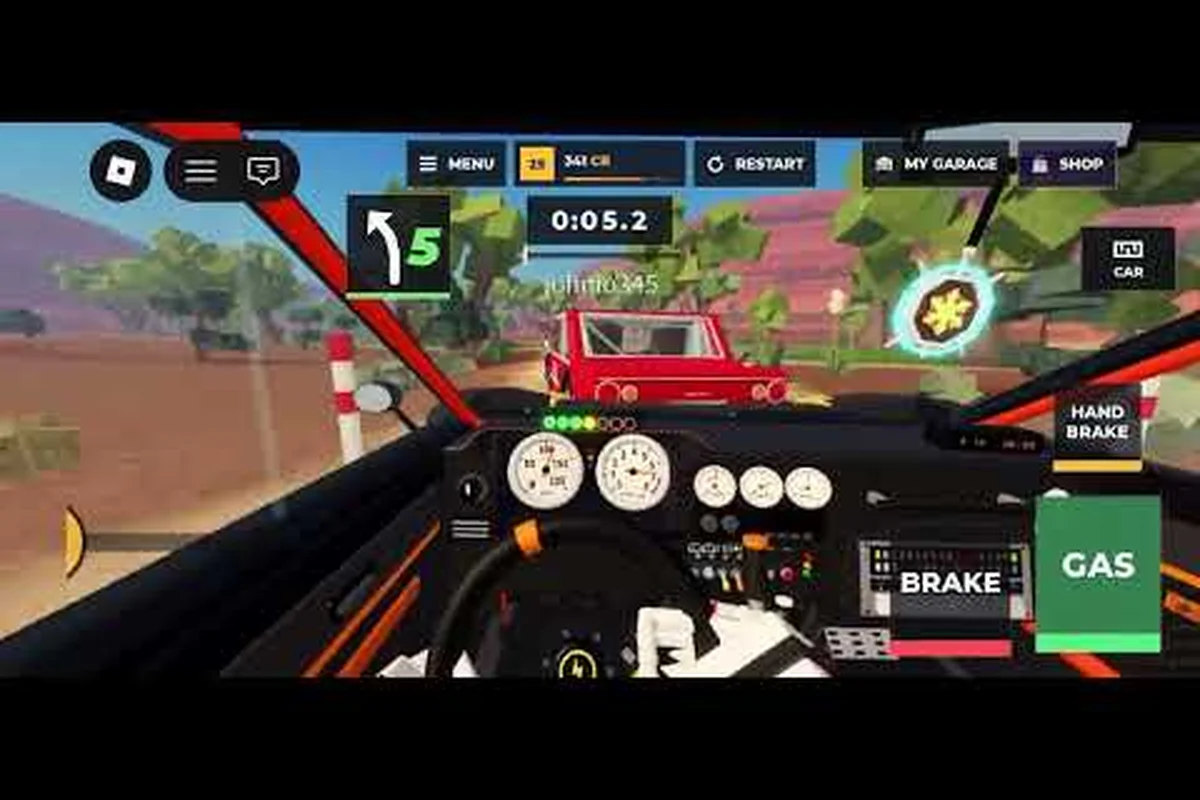
Low grip in Backseat Rally turns every corner into a negotiation between speed and control, so a Backseat Rally low grip guide can prevent the spins, slides, and missed calls that ruin an otherwise clean stage. Learn to read the road, soften inputs, and carry momentum through rain, snow, and mud.
Backseat Rally Low Grip Basics: What Changes on a Slippery Stage
A Backseat Rally low grip guide starts with one principle: the car needs more time and distance to react than it does on a dry stage. Rain darkens the road, snow hides braking points, and mud pulls the vehicle away from the intended line. The driver’s normal rhythm therefore changes from quick corrections to smooth, measured inputs.
This Backseat Rally low grip guide focuses on the controllable parts of the drive rather than promising a single universal setting. Backseat Rally uses a co-driver system, so the callout gives you information, but the car still needs a deliberate response. A corner called early is safer than a corner called at the exact moment the rear begins to slide.
| Surface | First response | Main risk | Recovery priority |
|---|---|---|---|
| Dry tarmac | Braking and steering as usual | Overcooking a turn | Keep the car balanced |
| Wet road | Brake earlier, release sooner | Delayed braking and hydroplaning | Straighten the car |
| Packed snow | Reduce entry speed | Long, gradual slides | Avoid abrupt steering |
| Loose mud | Use gentle throttle inputs | Wheelspin and poor direction | Restore grip before turning |
The distinction matters because wet pavement, snow, and mud do not fail in the same way. A wet road can delay the response to braking, snow can make the stopping distance less predictable, and mud can drain acceleration while the tires search for purchase. The Backseat Rally weather guide gives a useful overview of these condition categories and their effects.
Build a Smooth Input Rhythm
The most effective change is to make every input smaller and more deliberate. Brake pressure, throttle application, and steering corrections should feel progressive rather than abrupt. If a stage is visibly wet, treat the first corner as a positioning corner and save aggressive speed for straighter sections where the car is more stable.
A useful practice is to repeat the same corner under three different assumptions: dry, damp, and low grip. On the dry run, establish the ideal line and braking reference. On the damp run, brake earlier and use less steering lock. On the low-grip run, prioritize a clean exit even if it means arriving more slowly. This creates a repeatable decision process rather than relying on instinct alone.
Backseat Rally Slippery Stage Tips for Braking and Steering
Braking is the most important adjustment in a Backseat Rally slippery stage. Wet surfaces reduce the amount of grip available for deceleration, so the same braking point that works in dry conditions may cause a longer slide. Begin braking earlier, release the brake progressively, and avoid adding a sudden steering input while the car is still shedding speed.
Brake in a Straight Line
When the road is wet, keep the wheel aligned with the lane through the braking zone. If the car begins to rotate, straightening the wheels can help it regain stability, although the exact response depends on the surface and the car. The goal is not to force a turn while braking; it is to finish deceleration first, then rotate the car toward the corner.
| Braking situation | Better technique | Avoid |
|---|---|---|
| Straight wet-road section | Earlier brake, progressive release | Late full-brake press |
| Loose gravel or mud | Gentle braking with the car settled | Sudden steering while sliding |
| Packed snow | Smooth, sustained deceleration | Repeated brake-and-release taps |
| Corner entry | Turn first, then add brake if needed | Combined hard brake and hard turn |
The co-driver’s call is still valuable, but it should be interpreted as a location rather than an automatic instruction to brake at full force. Listen for direction, distance, and severity. When the call arrives earlier than expected, assume reduced grip and leave a larger margin. For more detail on reading the stage, the Backseat Rally driving-line guide explains how positioning affects the next corner.
Choose a Line That Gives You Room
On a low-grip road, a wider line can be safer than the shortest line because it provides more space to correct the car. Look for firmer-looking ground, but do not assume that a darker patch is wetter or softer. In muddy stages, staying on the existing track is often more reliable than cutting across loose ground.
Steering should follow a smooth correction cycle: turn, observe the response, then adjust. Small corrections prevent the front tires from fighting each other, while large movements can create a sudden loss of grip. If the car is sliding, avoid rapidly alternating left and right inputs because that can make the slide less predictable.
Backseat Rally Wet Surface Guide: Throttle Control That Prevents Spins
Throttle control is the final piece of the low-grip puzzle. A wet or contaminated road may not provide the same acceleration response as dry pavement, so a sudden throttle application can spin the wheels or pull the nose away from the corner. Apply power in a smooth, sustained movement after the car is pointing in the desired direction.
Add Throttle Gradually
Start with a small amount of throttle and increase it only when the car feels stable. This is especially important when exiting a hairpin, climbing a muddy rise, or accelerating out of a puddle. If the car begins to move sideways, reduce throttle before making a large steering correction. A light throttle can help settle the vehicle, but sudden changes between too much and no throttle can also unsettle it.
| Vehicle state | Throttle response | Steering response |
|---|---|---|
| Stable and aligned | Increase smoothly | Small, planned inputs |
| Light wheelspin | Ease off pressure | Hold the current line briefly |
| Rear moving outward | Reduce throttle | Correct gradually in the slide direction |
| Front washing out | Ease off and reduce speed | Avoid adding lock |
| Firm surface reached | Resume progressive power | Re-center the wheel |
The power-before-turn principle helps on loose surfaces, but it needs restraint in slippery conditions. Turning aggressively before the car gains momentum can point the tires toward a direction they cannot support. On the other hand, adding all the power at once can cause the rear to step out. A middle path is usually best: settle the car, add a modest amount of throttle, and increase it as traction returns.
Read the Surface Ahead
A Backseat Rally weather update is most useful when it changes your preparation rather than simply telling you that rain is present. Check whether the stage has long straights, frequent hairpins, forest sections, and exposed corners. A wide-open road may be manageable at moderate speed, while a tree-lined sequence with several direction changes demands more conservative timing.
Player experience reported in community videos supports a simple pattern: earlier braking and smoother throttle produce fewer dramatic recoveries. The Backseat Rally Guide by ItzVexo explains the co-driver callouts and the role of careful listening, which becomes even more valuable when the road offers less warning.
Backseat Rally Snow and Rain Guide for Different Conditions
Rain and snow require different priorities even though both reduce grip. Rain is often darker and can conceal standing water, while snow can make the entire road appear uniform. The Backseat Rally snow and rain guide should therefore separate the two conditions rather than treating every slippery surface as the same.
Rain: Watch for Later Braking and Hidden Edges
Wet roads can make lane markings and puddles harder to read. Set your braking reference earlier than usual, and look for darker sections that may collect water. Do not steer around a puddle at the last moment; small adjustments are safer than a sudden swerve that transfers the car’s momentum sideways.
In a heavy shower, reduce your commitment to a minimum speed and let the stage’s direction calls guide you. If the car hydroplanes, keep the steering straight and ease off the throttle. The car may feel slow to respond, so corrections should be patient rather than urgent.
Snow: Expect Longer Glides and Hidden Features
Packed snow can hide ridges, ruts, and changes in elevation. A corner that looks flat may lead into a gradual rise, while a pale area may conceal a sharper edge. Use the co-driver’s distance warnings to begin slowing earlier and carry less speed into ambiguous sections.
Snow also makes throttle response less consistent. A gentle climb may suddenly lose traction, while a downhill exit can pull the car forward faster than expected. Keep both hands committed to smooth inputs, and avoid crossing the center of the road unnecessarily because the available grip may change from one side to the other.
Mud: Preserve Direction
Mud rewards patience. The surface may be slow, but an early throttle surge can create deep ruts, wash the car sideways, or leave the front pointing away from the next corner. Stay on the established track where possible and choose a line that allows the car to straighten before you need to accelerate.
For deeper winter conditions, the Backseat Rally winter driving guide can be combined with this approach by focusing on snow-specific line choice and reduced entry speed.
| Condition | Main danger | Best priority | Practical target |
|---|---|---|---|
| Light rain | Reduced braking bite | Brake earlier | Comfortable, not maximum, entry speed |
| Heavy rain | Standing water and hydroplaning | Keep the car straight | Slow enough to see the road clearly |
| Packed snow | Long slides and hidden edges | Smooth inputs | Conservative speed through turns |
| Mud | Wheelspin and changing traction | Preserve direction | Use the established track |
Backseat Rally Weather Driving Tips for Consistent Stage Times
Low-grip driving is not only about surviving a slide. A controlled pace is usually faster than a crash followed by a recovery. The goal is to reduce unnecessary errors, keep momentum through corners, and prevent one small slide from turning into a cascade.
Build a Personal Wet-Stage Routine
Use the same routine every time a stage presents rain, snow, or mud. It should be short enough to remember and specific enough to improve. A useful sequence is to identify the surface, choose a conservative reference, brake early, settle the car, and add power only after the steering is settled.
| Stage feature | Adjustment | Reason |
|---|---|---|
| Long straight | Moderate speed increase | More room to correct later |
| Tight hairpin | Earlier brake, lower entry | Less room for a slide |
| Forest section | Extra caution before the turn | Trees limit error recovery |
| Open sweeping bend | Smooth throttle, steady steering | Maintain balance through the arc |
| Muddy climb | Low, progressive power | Reduce wheelspin |
| Icy-looking patch | Avoid abrupt inputs | Surface change may be sudden |
Practice the routine during a noncompetitive stage attempt. Record the stage, note where you braked, and compare your inputs with the cleanest run. The goal is not to eliminate every small slide; it is to prevent a slide from becoming a spin and to recover without losing several seconds.
Preserve a Margin for Unknown Surfaces
Weather can change the grip between two similar corners. Keep a small reserve of speed in reserve rather than using every available bit of grip at the first corner. This margin is especially valuable when the co-driver gives a direction change with little warning, or when a shaded section becomes icy after a sunny approach.
The Backseat Rally stage-weather guide provides a useful framework for comparing conditions across the stage. You can also review the stage’s layout before driving, especially if you want to know where broad runoff space exists and where a mistake would be expensive.
Separate Survival Speed from Racing Speed
There are two different speeds worth tracking. The first is control speed, the pace at which you can complete the stage without repeated emergency corrections. The second is racing speed, which you reach only after confirming the surface supports more aggression. Raising the second speed before understanding the surface is the most common cause of a bad low-grip run.
Keep the first corner of a new weather stage below the level that feels completely comfortable. If the car remains quiet through the first third of the stage, you can gradually test more speed at the next clear braking zone. If the rear moves, reset to the safer rhythm instead of trying to force a record immediately.
Backseat Rally Low Grip Recovery Techniques and Mistakes to Avoid
Even with the best preparation, a low-grip stage can still produce a slide. Recovery depends on reducing the severity of the error. A small correction that keeps the car pointed in the right direction is often faster than a dramatic input that tries to reset the vehicle instantly.
Handle a Slide in Three Stages
First, reduce the cause. If the rear is sliding because of excessive throttle, ease off the power. If the car is rotating because of a sudden steering input, straighten the wheel and wait for the grip to return. Second, choose a direction and hold it long enough for the car to settle. Third, apply the next input only after the car is stable.
| Situation | Immediate action | What not to do |
|---|---|---|
| Rear slides under power | Ease off throttle | Add more power to “save” the slide |
| Front pushes wide | Reduce speed and steering load | Yank the wheel inward |
| Car spins | Keep inputs minimal | Force a hard countersteer |
| Water on the road | Hold a straight line | Make a late avoidance swerve |
| Mud loses traction | Look for firmer ground | Accelerate hard out of the rut |
Avoid braking hard while the car is already sliding unless the situation requires an emergency stop. Hard braking can reduce the grip available for steering and make the next direction change more difficult. In many cases, releasing the accelerator and allowing the car to regain alignment is the better first response.
Correct the Most Common Mistakes
The most common low-grip errors are late braking, abrupt steering, and throttle that arrives before the car is ready. Another common mistake is treating a wet corner like a dry one because the car still responds normally at first. Grip can fall away suddenly, especially at the transition from a shaded road to an exposed section.
A clean run often looks uneventful from the outside. The driver brakes in a straight line, turns progressively, and adds power only after the car is settled. The Backseat Rally weather driving tips can help you connect these inputs with the specific stage conditions you are facing.
Reset After a Spin Instead of Recovering
If the car has already spun, reset rather than trying to recover from a deeply sideways position. A reset may cost more time than a clean continuation, but a bad recovery can end in a collision, a missed checkpoint, or a second mistake. The best low-grip decision is sometimes the one that protects the next clean section.
Backseat Rally Weather Preparation Checklist Before a Slippery Run
Preparation should happen before the stage starts. Check the weather update, review the route, and choose a car setup that feels controllable. Since weather can vary by platform and version, treat the stage’s visible conditions as the final authority rather than relying on a label alone.
Before starting, confirm these points:
- The stage preview identifies rain, snow, mud, or a mixed surface.
- The co-driver callouts are audible and the camera view is clear.
- Steering and braking sensitivity are set to a comfortable baseline.
- You have chosen a conservative braking reference for the first corner.
- You will wait for the car to settle before adding throttle.
- You know where the route offers more space for recovery.
- You can distinguish a temporary slide from a developing spin.
- The run is treated as practice if the weather makes the surface unclear.
The camera matters because a poorly framed road can hide a puddle or make a corner look sharper than it is. The PC-focused Backseat Rally guide by nocrown discusses camera behavior and control setup, both of which can improve your preparation before entering bad weather. Likewise, the Backseat Rally guide by CHALLS emphasizes launch timing and racing lines, useful ideas for keeping momentum without forcing a low-grip corner.
Final Low-Grip Checklist
| Before the corner | During entry | After the turn |
|---|---|---|
| Identify the surface | Brake earlier in a straight line | Let the car align |
| Choose a wider line | Use gentle steering | Add power progressively |
| Leave a speed margin | Avoid abrupt inputs | Keep corrections small |
| Listen for direction | Respect distance warnings | Prepare for the next surface |
The final takeaway is simple: smooth inputs preserve the options you need. Brake before the corner, keep the car aligned while it slows, and add throttle only when the road can support it. That sequence works across rain, snow, and mud, although each condition deserves a slightly earlier braking point and a more cautious approach.
Frequently Asked Questions
Should I use the same speed in rain, snow, and mud?
No. Rain usually calls for earlier braking and attention to standing water, while snow needs more distance because slides and hidden edges are harder to predict. Mud often rewards the lowest possible speed and the firmest established track, so treat each surface as a separate grip condition rather than using one fixed target.
How do I stop a car from spinning on a wet Backseat Rally stage?
Ease off the throttle, keep the steering close to straight, and avoid abrupt brake or steering inputs while the car is moving. If the vehicle is already rotating, let the slide settle before demanding a new direction. The goal is to restore alignment rather than force an immediate correction, because a sudden input can consume the remaining grip.
What is the best way to handle mud in Backseat Rally?
Stay on the established track, keep the car moving gently, and avoid accelerating hard out of a rut. Mud can reduce acceleration while the tires search for traction, so steering and throttle should remain progressive. If the car begins to slide sideways, reduce power and preserve direction until firmer ground or a stable line presents itself.
Should I use a co-driver callout as my exact braking point?
Treat it as an important location cue, not a command to brake at full force. On slippery surfaces, begin slowing before the called corner if the warning distance is short or the road looks dark, glossy, uneven, or covered with snow. The co-driver supplies the information; your judgment determines how much grip the approach needs.
Can I improve low-grip times by changing the car setup?
Possibly, but the larger gains usually come from a steadier driving rhythm. A setup that makes braking and steering easier to control can help, yet excessive speed, abrupt steering, and early throttle still cause errors. Test adjustments during practice, then compare braking consistency, recovery speed, and overall stage time rather than judging only the fastest corner.