
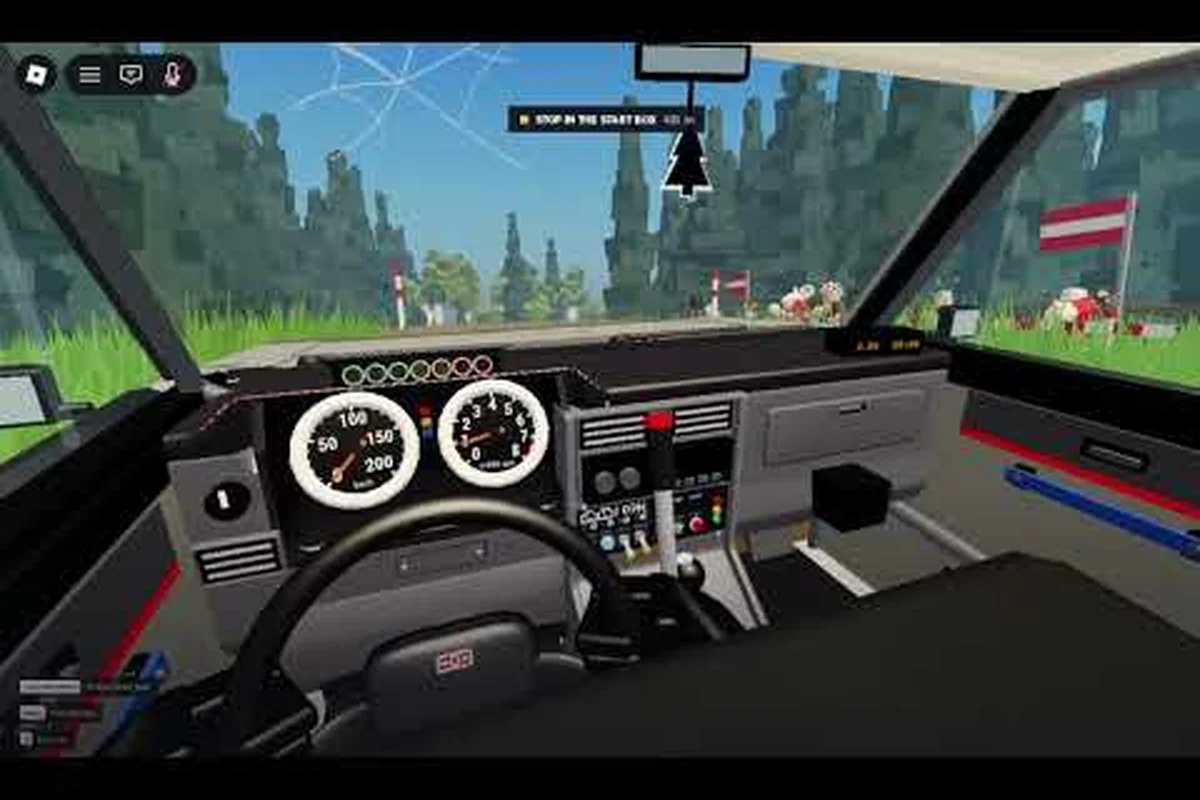
Backseat Rally vehicle stats determine which car fits your racing style, and a balanced purchase can save money before the next rotation. This guide compares speed, handling, tiers, garage choices, and the 2026 car rotation so you can identify the strongest buy for your budget.
What Backseat Rally Vehicle Stats Actually Tell You
Backseat Rally vehicle stats are most useful when you read them as a set rather than focusing on one inflated number. A car with the highest top speed may turn poorly or lose its advantage on technical terrain, while a balanced vehicle can be easier to control in repeated short events. Because cars can change through the rotation, the right comparison also depends on what is available when you shop.
The main figures to monitor are top speed, acceleration, handling, and braking. Their relative value shifts by track, but there is a practical hierarchy: acceleration helps in launches and tight corners, handling determines how confidently you can rotate the car, and braking control is often more valuable than a marginal speed increase when a route contains several turns.
| Statistic | What it affects | Best race situation |
|---|---|---|
| Top speed | Straight-line pace | Open or flowing circuits |
| Acceleration | Launch and corner exit | Short sprints and technical courses |
| Handling | Steering response and stability | Tight corners and precise lines |
| Braking | Stopping control | Frequent direction changes |
| Overall balance | Consistency across tracks | Mixed conditions and general play |
Stat values should be compared within the same vehicle class and current rotation. Community-reported vehicle pages can help identify candidates, but the in-game garage is the authority for the exact car, trim, and current stat version you own. For example, two vehicles may share the same class yet behave differently after upgrades, so check top speed, acceleration, handling, and braking in the garage before treating either as the best purchase. Rotation timing also matters: recheck the car list before buying, since a strong vehicle can leave the rotation and alter which balance is actually available.
Why a Single Stat Can Mislead You
A car can top out at a higher speed but still lose races if its grip and steering response force an early correction. That extra velocity becomes a liability when a corner arrives sooner than expected or when the road is uneven. By contrast, a slightly slower car with stronger handling can carry momentum through a sequence of bends and avoid a costly wall strike.
The backseat rally top speed car is therefore not automatically the best vehicle for every event. It may dominate long straights, yet a lower-speed car can produce a faster lap when acceleration, braking, and cornering work together. The best choice is the one whose weak stat is least likely to decide the route.
Build a Practical Stat Profile
Start with the race you expect to enter, then assign a priority to each measurement. A short hill climb emphasizes acceleration and control, a long circuit favors sustained top speed, and a technical sprint rewards traction. This prevents a premium car from being selected only because its garage card has a larger number.
A useful garage checklist is: note each car’s displayed backseat rally vehicle stats—top speed, acceleration, handling, and braking—then compare their relative trade-offs for the intended route. For example, prioritize acceleration and handling for a technical sprint, but examine top speed and sustained pace for a long circuit; a high top-speed car with weak braking may still be unsuitable for frequent corners. This stat-based shortlist makes it easier to identify a strong backseat rally top speed car without assuming that the largest garage-card number is automatically the best purchase.
-
Confirm the car appears in the current backseat rally car rotation.
-
Compare the displayed top speed, acceleration, handling, and braking.
-
Identify whether the route contains long straights, frequent corners, or mixed terrain.
-
Test the car briefly before committing scarce currency.
-
Keep a balanced backup for events where precision matters more than raw pace.
Comparing the 2026 Backseat Rally Car Tiers
A backseat rally car tier list 2026 should reflect more than raw speed. The strongest tier needs enough control to convert its performance into completed races, while the lower tiers remain useful when their cost or availability is favorable. Because the garage changes over time, treat the ranking as a buying framework rather than a permanent promise about every car.
| Tier | Typical performance profile | Best use | Buying guidance |
|---|---|---|---|
| S | Elite speed and strong control | High-level competition and personal bests | Buy when affordable and available |
| A | Excellent balance with minor weaknesses | Versatile progression | Strong general-purpose choice |
| B | Competitive in selected stats | Shorter events or lower budgets | Buy for a specific stat advantage |
| C | Noticeable handling or speed limits | Learning and inexpensive starts | Use until a better option appears |
| D | Low overall effectiveness | Temporary backup | Avoid if other cars are available |
The backseat rally top speed car will usually come from the upper end of the ranking, but a tier reflects the complete package. If two vehicles share a tier, a top-speed specialist may fit one event while the other car's handling makes it stronger in corners.
Why Tier Position Can Change
The backseat rally car rotation can place a different set of vehicles in the garage, and a car's relative value can also change when one of its strongest competitors is unavailable. A mid-tier car may become a better purchase simply because it offers the best combination of performance and price at that moment. Player reports have long treated rotation timing as a major part of vehicle value, so buying at random rarely produces the most efficient garage.
Update your ranking when the garage changes by checking each available car’s top speed, acceleration, grip, and price against the current garage rather than relying on a fixed backseat rally car tier list 2026 order. For example, if the highest-tier option rotates out, compare a mid-tier car’s stat lines with the remaining vehicles to identify the new performance-to-price leader. Also note how a stronger rival’s absence can change a car’s value, since the best purchase is not always the car with the highest raw stats but the one that fits the current rotation and the terrain you drive.
-
Recording which cars remain available.
-
Comparing the current stat lines.
-
Moving any unavailable vehicle to a temporary benchmark position.
-
Rechecking prices before making a purchase.
-
Testing the strongest new option on familiar terrain.
Choose a Tier by Player Goal
Players focused on medals should prioritize consistency, because repeated clean laps usually matter more than a spectacular but inconsistent result. A strong all-around car in the A tier can outperform a theoretical S-tier purchase when the latter demands precise inputs. For records and head-to-head competition, raw speed and acceleration deserve more attention, although handling still protects the run.
The current 2026 car ranking provides a broader list for checking where a candidate sits. Use it alongside the live garage rather than assuming that a fixed tier survives every rotation or balance adjustment.
Finding the Backseat Rally Top Speed Car
Identifying the backseat rally top speed car is straightforward in the garage: compare the speed number on every available vehicle, then verify the handling and acceleration figures. The leader in raw speed may still be less effective in a technical race, so the purchase decision should reflect the track you expect to drive.
| Search priority | What to inspect | Practical result |
|---|---|---|
| Highest speed value | Top-speed statistic | Fastest candidate on open sections |
| Fast acceleration | Acceleration statistic | Best response in short dashes |
| Strongest steering | Handling statistic | Most confident through corners |
| Highest braking | Braking statistic | Better control before direction changes |
| Best price-to-performance | All stats against price | Best long-term garage value |
Raw Speed Only Counts After Acceleration
Raw speed matters only after the vehicle reaches it. Acceleration, traction, and the chosen line determine how quickly that speed becomes available. A car that wins the straight section but loses several tenths through a bend is not the best choice for a combined course, and this is why top speed should be one input in a larger comparison.
For open circuits, compare the top-speed leader with the best acceleration car. For twisting layouts, compare the handling leader and a balanced option. This creates a shortlist of two or three cars rather than a false single winner. The more focused cars ranked by speed and handling guide can help narrow those candidates by race format.
Read the Garage in a Fixed Order
Begin with availability, then price, top speed, acceleration, handling, and braking. This order prevents visual excitement from overriding availability and budget. Record the values in a simple table, test the top two candidates, and keep the one that feels more controllable even if another car lists a slightly higher headline number.
Remember that vehicle purchases should be evaluated against the cars actually available. A garage chart based on an earlier rotation can become outdated quickly, which is why this guide avoids claiming unsupported numerical rankings that may not match the current game.
Using the Backseat Rally Car Rotation Strategically
The backseat rally car rotation is the timing layer of vehicle shopping. Good stats matter only when the car is available, and a strong purchase can become poor value if another excellent car arrives soon afterward. Planning around rotation timing lets you reserve currency for a better option instead of spending it on the first attractive card you see.
| Rotation situation | Best action | Reason |
|---|---|---|
| No favored car available | Save currency | A stronger option may arrive soon |
| One competitive car appears | Test before buying | Confirm handling and value in practice |
| Several strong cars appear | Compare price and stats | Avoid paying for redundant performance |
| A favorite leaves the garage | Re-rank the garage | Availability changes relative value |
| New car enters with low price | Purchase cautiously | Test its weak stats before committing |
Delay Purchases When the Garage Is Weak
Saving during a weak rotation is usually better than buying a car that merely looks expensive. The next opportunity may provide stronger acceleration, more balanced handling, or a better price. A temporary low-tier vehicle can still be valuable for learning routes, but it should not consume funds intended for a lasting upgrade unless your schedule requires immediate access.
For a detailed view of availability and tier movement, the vehicle ranking for the 2026 rotation is a useful companion to your garage notes. The important habit is to note the date of each observation, because a ranking without that context can quickly become misleading.
Buy a Specialist and Keep a Balanced Backup
A garage does not need one car for every condition. A specialist can cover open or short events, while a balanced vehicle handles general racing and technical courses. This setup is particularly useful for medals because it provides a dependable option when the specialist is not ideal for the route.
Rotation-based planning turns availability into a purchasing strategy. Instead of reacting to the current garage, compare the next likely need, hold enough currency, and decide in advance which stat improvement would justify spending. That discipline makes even a mediocre rotation easier to navigate.
Backseat Rally Garage Guide: Observe, Compare, Test
A solid backseat rally garage guide follows three stages: observe, compare, and test. Observation prevents you from buying blindly, comparison ensures that a high headline stat does not hide a weakness, and testing reveals whether the vehicle feels consistent under real steering inputs. This process produces better results than relying on a single rating.
| Garage stage | Action | Records to keep |
|---|---|---|
| Observe | Check every current vehicle | Price, speed, acceleration, handling, braking |
| Compare | Group cars by race specialty | Open-course, technical, balanced |
| Test | Drive familiar routes | Launch, cornering, braking, recovery |
| Purchase | Buy the strongest unmet need | Cost, availability, expected use |
| Maintain | Recheck after rotation | New rivals, departures, value changes |
A Three-Car Garage Can Cover Most Races
One aggressive car, one control-oriented car, and one balanced option create a versatile collection. The aggressive car handles long straights and short sprints, the control-oriented option handles technical layouts, and the balanced car covers mixed tracks. You do not need every vehicle in the rotation, because a focused garage with distinct roles is easier to master.
Use the complete car tier explanation when a vehicle appears strong on paper but its tier label needs context. The tier should support a practical decision: which race benefits from it, what weakness it carries, and whether the price compensates for that weakness.
Buy by Time Available and Event Goal
Players with limited time benefit from one dependable car that handles most events. Players who compete regularly can specialize after learning a reliable baseline. A balanced purchase is more valuable than a premium specialist when you still need to discover which routes suit you.
Before buying, ask three questions: first, compare the car’s speed, grip, and handling stats against the routes you actually race; second, check its vehicle tier and upgrade path so a poor early purchase does not block a stronger garage addition; and third, confirm whether its current rotation will remain available long enough to fit your schedule. For example, a fast car with mediocre grip may suit open tracks but struggle on technical stages, while a balanced backseat rally vehicle with lower top speed can be more consistent across mixed terrain.
-
Will I race mostly on open tracks, technical tracks, or both?
-
Can I comfortably recover after a mistake with this car?
-
Is another stronger car likely to enter the garage soon?
A good backseat rally best car purchase balances current performance with future availability. If the car solves a real need, performs consistently, and does not block a more valuable purchase, it is a sound decision even if it is not the absolute highest-ranked option.
Practical Test Plan Before Buying a Car
Testing should measure consistent behavior, not just the feeling of a fast launch. Use the same route for every candidate, complete two or three clean laps, and note where the car loses time. This creates a repeatable comparison from the backseat rally vehicle stats screen and your own driving results.
| Test area | What to watch | Warning sign |
|---|---|---|
| Standing start | Initial acceleration and wheel spin | Car cannot pull away cleanly |
| Fast bend | Steering response and body control | Frequent correction or slide |
| Brake zone | Stopping stability | Lockup or poor rotation |
| Long straight | Top-speed consistency | Speed drops unexpectedly |
| Technical section | Acceleration out of corners | Frequent bogging or overshoot |
Compare One Variable at a Time
Changing routes between candidates makes the results difficult to interpret. Keep the same starting line, boost usage, cornering line, and camera angle for each run. If possible, compare a specialist with a balanced car so you can identify which stat produces the difference instead of attributing it to luck.
The backseat rally top speed car should be tested on a straight section, while a handling-focused candidate needs a technical route. If neither car wins every section, build a small role-based garage instead of forcing a universal winner. That approach also saves money because you buy only for unmet needs.
Make the Result Repeatable
One clean lap can be an accident, while three similar runs reveal a dependable strength. Give the vehicle time to reach its intended pace and compare the same corner repeatedly. The best buy is not merely fast on one run; it preserves its performance after minor mistakes, which is essential in medal events.
Frequently Asked Questions
What is the best car in Backseat Rally right now?
The best car changes with the current garage and track type. A balanced vehicle with strong acceleration and handling is the safest general choice, while the fastest top-speed specialist is best on open courses. Confirm availability and compare all four major stats before buying because the rotation can change relative value quickly.
Does the highest top speed guarantee the best Backseat Rally car?
No, because acceleration, handling, and braking determine how effectively a vehicle uses its speed. A high-speed car can lose time in technical corners or struggle to recover from mistakes. Compare it with a balanced car on the same route, paying attention to completed lap time rather than a single straight-line result.
How should I use the Backseat Rally car rotation for purchases?
Track which vehicles enter, remain, and leave the garage, then save currency when your preferred choice is unavailable. Buy only when a current car fills a clear need, such as a technical-course specialist or an open-track speed car. This prevents a temporary option from blocking a stronger, better-priced arrival.
What is the best car purchase for a new Backseat Rally player?
A balanced car is usually the most useful first purchase because it can handle varied tracks without demanding advanced control. Avoid choosing solely by the largest top-speed number. Test the candidate, confirm that it feels stable, and keep a small reserve so you can add a specialist when the rotation provides one.
Can I judge vehicles only through the garage stats?
Garage stats provide an excellent first filter, but they cannot show every practical difference. A short test on a familiar route reveals steering response, braking stability, acceleration out of turns, and how forgiving the car feels after a mistake. Use the numbers to build a shortlist and driving to make the final choice.