
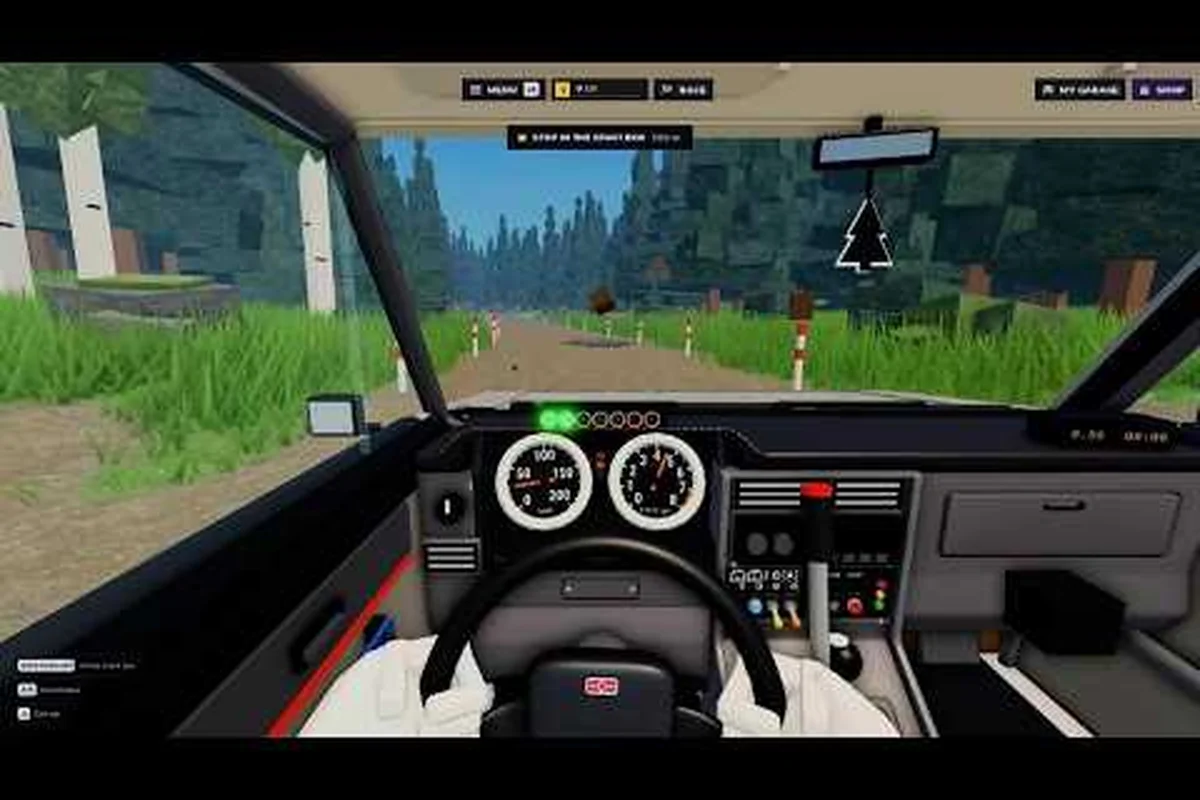
The Backseat Rally roadmap matters because every patch can reshape stages, cars, rewards, and competitive play. This clear tracker connects each Backseat Rally announcement and patch note to the changes that affect racing, while flagging Backseat Rally maintenance windows, tournament deadlines, and version-specific balance updates. That context helps explain why an apparently minor car-stat or AI adjustment can alter event results, reward farming priorities, and the practical value of each Backseat Rally tournament before you enter the grid. nd version-specific balance updates. That context helps explain why an apparently minor car-stat or AI adjustment can alter event results, reward farming priorities, and the practical value of each Backseat Rally tournament before you enter the grid; see our Backseat Rally tournament balance changes and event details for the latest context.
Backseat Rally Roadmap: What Players Can Track Today
A useful Backseat Rally roadmap separates confirmed information from player expectations. The available official communication confirms that Patch 1 includes a full stage selector, a new career mode, a vehicle upgrade system, and additional player-versus-player options. It also identifies several future-stage projects, although no release dates have been assigned to those stages.
That distinction prevents confusion when community posts use “upcoming” for several very different things. A confirmed feature belongs on the current roadmap, a work-in-progress item is still being developed, and a stage with a visible harbor is not necessarily ready for public release.
| Roadmap status | Backseat Rally item | What players can verify | Release information |
|---|---|---|---|
| Confirmed in Patch 1 | Full stage selector | Players can choose unlocked stages from the menu | Included with Patch 1 |
| Confirmed in Patch 1 | New career mode | A structured progression path replaces the old loose stage flow | Included with Patch 1 |
| Confirmed in Patch 1 | Vehicle upgrade system | Cars can gain additional performance through earned resources | Included with Patch 1 |
| Confirmed in Patch 1 | More PvP options | Additional match configurations expand head-to-head play | Included with Patch 1 |
| Under development | Future rally stages | New environments are being planned, but their exact launch order is unknown | No date announced |
| Unscheduled | Official tournament support | Competitive features and permanent events have not received a release window | No date announced |
Confirmed Versus Unscheduled Features
Patch 1 content is the safest planning target because it is the only update with a clearly defined feature list. The stage selector, career mode, upgrades, and expanded PvP options form a connected progression package: players gain more control over stage selection, a clearer long-term objective, reasons to earn resources, and more situations in which different cars can be used.
The less certain portion concerns permanent tournaments and additional stages. Those ideas are relevant to the Backseat Rally roadmap, but a visible project or developer mention is not the same as a scheduled release. Until a date, build number, or test window is announced, players should treat them as future work rather than prepare for a specific launch.
The VendoPlus full-game walkthrough provides useful context for the current progression loop, including the move from early stages into the garage, the role of Credits, and the transition into head-to-head lobbies. That baseline makes Patch 1 easier to evaluate: players can compare the new menu, career structure, vehicle progression, and PvP choices with the systems they already use.
Backseat Rally Patch 1: Confirmed Changes and Practical Effects
Backseat Rally patch 1 is the nearest actionable section of the roadmap because its core features are already identified. Rather than treating every headline as an isolated addition, it helps to view the patch as a progression update that connects stage access, car ownership, resource collection, and competitive matches.
| Confirmed Patch 1 feature | Direct gameplay change | Strategic effect | Priority for preparation |
|---|---|---|---|
| Full stage selector | Unlocked stages become directly selectable | Reduces replay friction and supports targeted practice | Learn the menu layout before installing |
| New career mode | Progression is organized into a defined path | Creates clearer goals for Credits, cars, and upgrades | Decide whether to follow or repeat stages |
| Vehicle upgrade system | Cars gain performance improvements | Encourages resource use beyond buying a new vehicle | Reserve Credits for upgrades after testing |
| Additional PvP options | More match types become available | Rewards adapting from solo time trials to head-to-head races | Review controls and car handling |
A Full Stage Selector Changes Practice Sessions
The stage selector is more than a convenience feature for anyone trying to improve a specific part of their driving. Current community guides already emphasize reading co-driver calls, braking before off-camber sections, and keeping the throttle stable in deep mud. Direct stage access makes those drills easier to repeat without replaying the entire progression sequence.
A Stage 5 player run illustrates the practical value of this change. The run focuses on a slippery mud stage, including an early-braking point and a steadier approach through deep ruts. With a stage selector, players can use that route knowledge as a focused practice target rather than treating each attempt as part of a longer campaign run.
Career Mode and Vehicle Upgrades Share the Same Loop
Career mode gives progression a clearer destination, while the vehicle upgrade system gives repeated racing a more direct reward. The two systems should work together: complete useful career objectives, earn Credits through the stages, and then decide whether a new car or an upgrade to the current car offers the better return.
That decision should be based on actual performance rather than appearance alone. Community videos describe different handling strengths on snow and mud, so an upgrade that improves a car’s weakest condition may be more valuable than replacing a balanced vehicle. Players who enjoy narrow tree-lined sections may favor acceleration and control, while players who repeatedly challenge slippery stages may want stability and predictable braking.
Expanded PvP Options Reward Preparation
The confirmed PvP additions create more opportunities to race against other players, but they also make a sound setup more important. A competitive guide from CHALLS highlights launch timing, inside-versus-outside line selection, overtaking in narrow sections, and defensive driving. Those skills become more valuable when the number of match formats increases.
Players should test at least one quick car and one more stable car before trying different PvP configurations. Quick cars can help with launch and short straights, but a stable car may be easier to control when contact, defensive lines, or repeated corner entries complicate the run. A balanced garage makes it easier to adapt without changing cars between every match.
Backseat Rally Announcements: How to Read Future Development Signals
Backseat Rally announcement posts are most useful when they identify a concrete change to the game rather than merely expressing appreciation for the community. Roadmaps, patch notes, server notices, and developer responses each provide different evidence, so players should read them as a hierarchy of confirmation.
| Source type | Typical level of detail | Reliability for planning | What to verify |
|---|---|---|---|
| Official roadmap | Broad features and development themes | High for direction, low for timing | Confirmed versus under-development labels |
| Patch notes | Exact changes, fixes, and balance adjustments | High | Build version, platform, and change behavior |
| Server announcement | Temporary event, downtime, or rule change | High for that event | Start time, duration, and affected modes |
| Developer social post | Early discussion or demonstration | Medium | Whether later notes confirm the idea |
| Community report | Observed behavior or player expectation | Variable | Reproduction steps and current version |
Strong Signals Versus Rumors
A feature shown in a developer post can still change before release. The stage roadmap screenshot demonstrates that additional stages are being considered, but it does not provide a delivery schedule, stage list, or final order. The same distinction applies to competitive play: the idea of a Backseat Rally tournament is part of the game’s future direction, yet a permanent event system cannot be assumed to be finished.
The safest rule is to require two forms of confirmation. For example, a tournament announcement becomes actionable when an official notice supplies a start date and a patch note explains its format or rewards. Until then, community conversations remain useful for judging likely player interest, but they should not be treated as an official event calendar.
Maintain a Clean Change Log
Players often use Backseat Rally news to decide whether to update immediately or wait. A personal log can record the current version, installation date, changed stages, car behavior, Credits balance, and any new matchmaking rules. This simple practice matters because later balance changes may be hard to judge without remembering the earlier state.
| Log category | Information to record | Why it helps |
|---|---|---|
| Version | Patch number or build label | Establishes the exact test baseline |
| Stages | Added, changed, or rebalanced routes | Shows where medal targets may shift |
| Vehicles | Handling, acceleration, or upgrade changes | Supports garage decisions |
| Economy | Credit income, costs, or reward changes | Helps plan purchases and upgrades |
| Multiplayer | Formats, queues, rewards, or penalties | Prevents match-to-match confusion |
| Stability | Disconnects, freezes, or server errors | Helps report useful bug evidence |
The broader Backseat Rally update log is the natural place to organize confirmed patch changes, while the update news overview can help separate individual fixes from larger development themes.
Backseat Rally Maintenance: Preparing for Downtime and Patch Installs
Backseat Rally maintenance is a normal part of live-service planning, especially when an update alters progression, vehicles, or multiplayer behavior. Players should use downtime to confirm the latest notes, review their save state, and plan the first post-update session instead of logging in at the final minute.
| Maintenance task | Why it matters | Recommended action |
|---|---|---|
| Check server status | Matches may be interrupted during deployment | Finish no critical race near the announced window |
| Read patch notes | Balance changes can alter previous records | Note affected cars, stages, and rewards |
| Save key setup | Control preferences may not return automatically | Photograph current settings |
| Review the garage | Upgrades may change available priorities | Choose a stable test car before experimenting |
| Check the tournament calendar | Seasonal events may use a separate entry period | Verify the regional start time and format |
| Test after maintenance | Server-side fixes may not appear immediately | Run a short stage and one PvP match |
A Low-Risk Post-Patch Test Plan
After Backseat Rally maintenance ends, begin with a solo stage where the goal is control rather than a personal record. Confirm that the car starts, the co-driver calls appear, stage progress saves, and Credits are credited when the run ends. A short test can expose menu, progression, or economy issues before a player invests time in a long event.
Next, test the same car on a contrasting surface. The ItzVexo tutorial and the nocrown PC guide both cover systems useful for this process: callouts, basic controls, camera behavior, and sensitivity. Comparing a dry course with mud or snow can reveal whether an apparent handling issue comes from the patch or simply from the stage’s surface.
Handle Unexpected Errors With Useful Evidence
A screenshot alone may not help when a server-side problem is involved. Record the stage, car, weather, approximate time, and what happened immediately before the failure. If the issue concerns the stage selector, note whether the stage was reached from the menu, career mode, or a replay. Precise evidence makes duplicate reports easier to compare and helps the developer distinguish a local control problem from a broader server issue.
The new-player guide on controls and early car selection can also serve as a baseline. If a setting behaves differently after maintenance, compare the current configuration with the guide’s general setup before assuming the patch changed the mechanics.
Backseat Rally Tournament: Competitive Events and Planning Priorities
The Backseat Rally tournament sits on the roadmap as a relevant competitive goal, but its permanent event format and schedule are not yet defined. Players can still prepare intelligently by separating the skills required for a stage time trial from those needed for direct competition.
| Preparation area | Time-trial focus | Tournament focus |
|---|---|---|
| Launch | Minimize delay and wheelspin | React to opponents and protect the inside line |
| Racing line | Find the fastest clean route | Choose a line that supports overtaking and defense |
| Surface control | Learn one stage’s grip level | Adapt quickly between mud, snow, and paved sections |
| Car choice | Optimize for medal time | Balance speed, stability, and restart confidence |
| Credits | Earn resources for upgrades | Manage the economy without risking a key car on every event |
Turn Solo Practice Into Competitive Habits
The current game’s two-role structure makes route knowledge and car control equally important. A useful tournament preparation cycle is to study one stage, record the callout sequence, complete several clean runs, and then reproduce the same braking points in a PvP race. This makes the practice transferable instead of treating PvP as a completely separate skill.
A CHALLS competitive guide provides specific examples of launch timing, narrow-section overtaking, and defensive driving. Drivers should not copy a single line blindly: the correct inside route may be blocked in a head-to-head match, so understanding the corner’s purpose matters more than memorizing one path.
Rewards and Entry Rules May Shape the Strategy
Permanent tournament rewards are not yet confirmed, so the strongest preparation should remain broad. A car that can compete across several surfaces is usually more valuable than a specialist optimized for one medal run. Players should also keep a small Credit reserve for repairs, upgrades, or another car rather than spending every resource immediately after earning a reward.
When a formal Backseat Rally announcement appears, look for seven details: the event format, stage pool, entry period, scoring formula, reward structure, eligibility rules, and repeat structure. These distinctions determine whether a tournament favors raw lap time, consistency across multiple stages, or direct PvP performance, so players should compare each announced rule with the cars, Credits, and upgrades they already have.
-
Event format: time trial, bracket, or head-to-head racing.
-
Stage pool: whether all stages are eligible or selected stages are used.
-
Entry period: how long players can register or qualify.
-
Scoring formula: best time, points, head-to-head results, or a combination.
-
Reward structure: Credits, car access, cosmetics, or progression items.
-
Eligibility rules: minimum progression, car restrictions, or regional limits.
-
Repeat structure: one-time, daily, weekly, or seasonal resets.
Players who already understand stage selection, upgrade timing, and PvP fundamentals can prepare without assuming a finalized tournament format. For example, a rally car with balanced grip and acceleration can remain useful whether the Backseat Rally announcement confirms a time trial, points-based stage series, or head-to-head bracket, while a specialist car tuned for one surface may lose value if eligibility rules or the stage pool change. Keeping some Credits unspent also protects the ability to repair damage or switch cars after a stage rotation, making preparation adaptable without committing resources to an unannounced format.
Backseat Rally News: What to Watch Before the Next Content Drop
Backseat Rally news becomes easier to act on when every update is sorted by certainty and impact. Patch 1 should remain the primary reference because it contains confirmed changes, while the broader stage and tournament concepts are best treated as long-term development goals. This prevents a well-intentioned rumor from setting an inaccurate deadline for a player’s calendar.
| Information tier | Current status | Best response |
|---|---|---|
| Feature list | Patch 1 includes four confirmed additions | Learn and test each feature after installation |
| Future stages | Additional stages are discussed, with no dates | Watch official demonstrations and release notes |
| Tournament system | Competitive direction exists, but no permanent schedule | Prepare skills and monitor event notices |
| Maintenance notices | Server windows appear as needed | Finish runs early and review notes |
| Balance adjustments | Determined by each patch | Compare current results with earlier records |
| Community suggestions | Player feedback rather than a commitment | Track interest without treating it as a promise |
A Weekly Check of Roadmap and Patch Notes
A short weekly check is enough to stay informed without chasing every rumor. Begin with the official game channels, then read the server notice, review the newest patch notes, and inspect the roadmap for changes in status. After that, compare community discussion with official wording. A useful test is whether a player can point to a date, build, feature description, or event rule; if not, it remains a lead rather than a schedule.
Players should also maintain a record of their own progress. A race rewards overview can help connect Credits income with garage and upgrade decisions, while a separate tournament guide can become more useful once the event structure is released. For now, these references support general preparation without inventing rules that the developer has not announced.
The key distinction is between a roadmap and a release calendar. A roadmap communicates direction; a calendar communicates timing. Backseat Rally currently provides clear Patch 1 content and broader development direction, so the most useful player plan is to learn the current game, prepare a flexible competitive garage, and verify each new claim against an official notice before changing priorities.
Frequently Asked Questions
When is the next Backseat Rally update released?
Patch 1 is the next clearly defined update in the current Backseat Rally roadmap, but the available information does not provide a precise public release date. Players should rely on the official game channels, server notices, and patch notes rather than community estimates. Once a rollout begins, checking the stage selector, career mode, vehicle upgrades, and PvP options will confirm that the deployment is complete.
Does Backseat Rally Patch 1 include new rally stages?
The confirmed Patch 1 feature list includes a full stage selector, new career mode, vehicle upgrades, and additional PvP options, while additional stages remain part of the broader development direction. In other words, the stage selector makes existing unlocked content easier to access, but the current information does not establish new stages as guaranteed Patch 1 content.
When will the next Backseat Rally tournament begin?
No permanent Backseat Rally tournament date has been confirmed in the current roadmap information. Until an official event notice supplies dates, entry rules, and rewards, treat tournament planning as skill preparation rather than calendar planning. Focus on stage times, launch technique, defensive driving, and maintaining a versatile garage so you can compete when the event format is announced.
How should I prepare for Backseat Rally maintenance?
Finish important races before the maintenance window, save your current control and camera settings, and review the patch notes before reinstalling. After servers return, test one solo stage, confirm that progress and Credits save correctly, and run a short PvP match. This sequence can quickly reveal whether a problem affects the client, the economy, or the servers.