
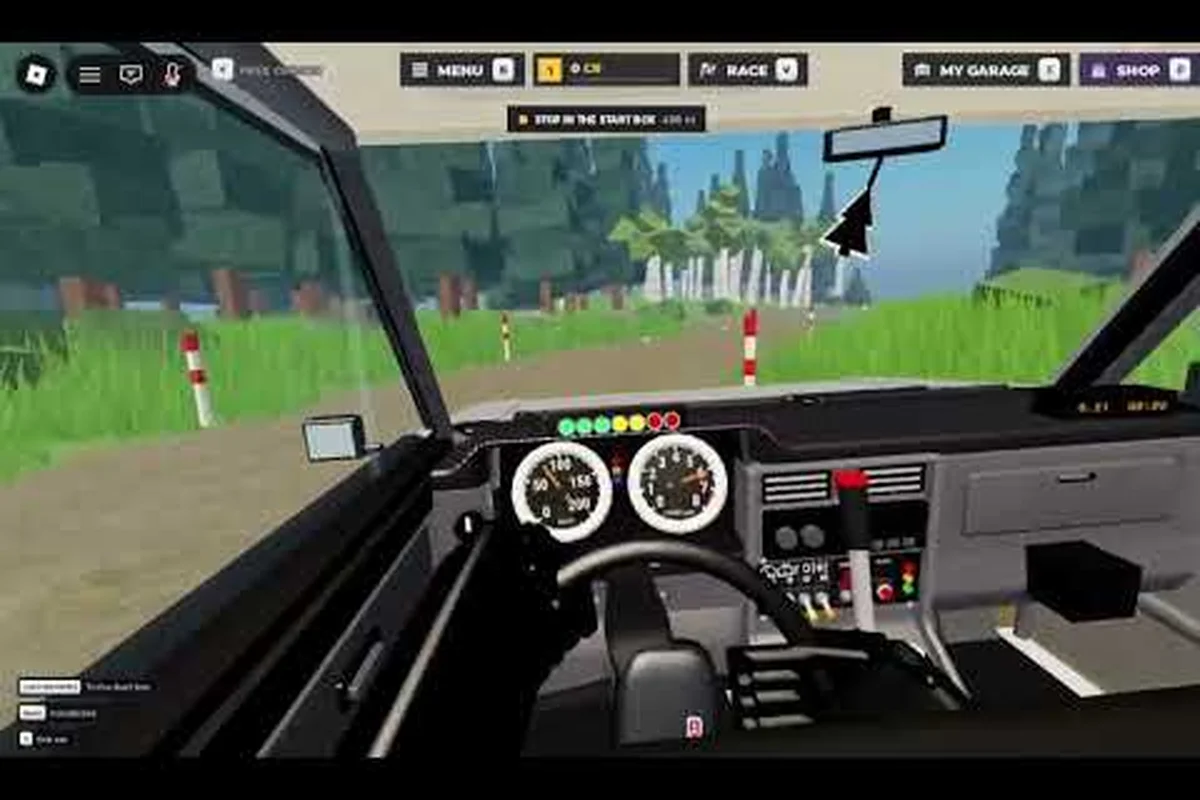
Backseat Rally release credits matter because your first purchases can shape how quickly you progress. Learn a practical 250-credit plan, avoid wasteful buys, and farm smarter.
Backseat Rally Release Credits Overview
Backseat Rally release credits are the currency you use to unlock cars, improve your setup, and move through the early progression loop. The most important point for a new racer is simple: credits are valuable when they solve a current bottleneck, not merely because a purchase is available. A balanced opening balance gives you room to react to the cars and events that appear first.
This guide focuses on a practical 250-credit starting pool, a budget that is large enough to create momentum without making every mistake feel permanent. The exact prices and reward amounts can change with updates, so treat the numbers below as a planning framework based on the game’s credit economy and community-reported progression patterns. For a deeper look at where rewards enter the account, see the credit rewards breakdown.
What Counts as a Smart Early Purchase?
A smart early purchase improves your race experience, gives you more ways to earn, or reduces a repeated frustration. Cosmetic items can wait unless they are free, while a vehicle that makes handling much easier may be worth more than a small permanent-looking upgrade. The key is to judge each option by return rather than by the size of its price tag.
Beginners should also separate income, reserve, and spending. Income comes from the current account balance, reserve is the portion you refuse to spend, and spending is limited to a high-confidence purchase. A simple plan is to spend no more than half of the balance at once, which leaves enough currency to cover an unexpected need or a better deal discovered later.
| Budget category | Suggested amount | Purpose |
|---|---|---|
| Immediate improvement | 100-125 CR | A meaningful car or upgrade that helps your next races |
| Reserve | 75-100 CR | Opportunities, rewards, and temporary price changes |
| Flexible spending | 25-50 CR | Small choices without destabilizing the plan |
| Total starting pool | 250 CR | A flexible budget for a new racer |
The First 250-Credit Decision
Your first decision should be based on what currently slows you down, because there is no universal best first purchase for every account. If your car feels difficult to control, prioritize handling. If you finish races but earn credits slowly, look for a reward or participation bonus that improves your income. If crashes are frequent, a stability improvement may produce the best return.
| Current problem | First purchase direction | Why it matters |
|---|---|---|
| Car slides or feels unpredictable | Handling-focused improvement | More control can improve finishes and reduce wasted attempts |
| Races end quickly with little reward | Participation or progression reward | More completed events create additional earning opportunities |
| Vehicle feels too slow | Speed-focused improvement | A better pace may produce stronger results when the course allows it |
| Credits are already low | Wait and farm | Patience protects the remaining reserve from an early mistake |
The first 250-credit strategy is not a shopping list. It is a sequence: identify the bottleneck, buy the smallest effective solution, then test the change in several races before considering another upgrade. This method helps you learn what the car needs instead of spending repeatedly on unrelated parts.
Backseat Rally 250 Credit Spending Priorities
The best 250 credits for one beginner may be poor for another, so use three filters: frequency, impact, and reversibility. A purchase that affects every race has more value than one used occasionally. An improvement that changes your finishing position has more value than a tiny visual change. A non-refundable purchase deserves more caution than a temporary or freely earned option.
Priority One: Fix the Car You Already Use
Your current car is the foundation of the early game. Before shopping for another vehicle, improve the one you understand and use most often. This minimizes the number of variables while you learn courses, opponents, and reward patterns. The best beginner credits are therefore the ones that make your existing car more consistent rather than opening a second learning curve.
A practical test is to make one purchase, run at least three comparable races, and record finishes, placements, and payouts. If results improve, keep the change; if nothing changes, do not immediately buy another item. This evidence-based approach turns Backseat Rally credit strategy into a controlled experiment instead of a series of impulse decisions.
Priority Two: Increase Earning Frequency
Cars and upgrades can help you race better, but repeated races supply the credits needed for future choices. Look for repeatable activities that award currency, especially those that remain accessible after you have learned the controls. The Backseat Rally beginner guide can help with the basics, but the credit-focused choice is the activity with a reasonable payout, short queue time, and a completion rate you can sustain.
Community reports frequently describe the strongest early income as a combination of regular races and smaller reward events rather than one isolated method. Because community data can change after updates, verify the current reward screen before committing many minutes to an activity. If two activities pay the same amount, choose the one that produces more finishes per session, because completion speed multiplies both the payout and the experience gained.
| Purchase target | Credit efficiency | Difficulty to judge | Beginner recommendation |
|---|---|---|---|
| Current-car handling | High | Medium | Buy when the vehicle repeatedly loses control |
| Current-car speed | Medium | High | Buy only after confirming the course rewards pace |
| New starter car | Variable | High | Compare its handling with the current car first |
| Cosmetic item | Low | Low | Save unless the cost is negligible |
| Temporary boost or bonus | Medium | Medium | Use during a planned farming session |
Priority Three: Keep a Recovery Buffer
Even a good plan can be interrupted by a bad race, a mistaken purchase, or a reward that takes longer than expected. Keeping 75-100 CR in reserve creates a buffer, so one mistake does not erase the progress made by the rest of the budget. This is particularly important for beginners who have not yet learned which cars suit their preferred route or driving style.
Do not treat reserve as a separate pile that must never be touched. It exists to prevent a temporary problem from becoming a major setback. When a high-value opportunity appears and the current purchase no longer creates a bottleneck, the reserve can become available. Until then, it protects the account from having to repeat the same credit farming session.
Backseat Rally Beginner Credit Planning
A credit plan becomes useful when it is simple enough to remember. For a beginner, the most effective approach is to divide the balance into three accounts in your notes: spend now, earn next, and protect for later. This Backseat Rally beginner credits system does not require complicated spreadsheets or constant menu checking. It simply keeps immediate temptation separate from long-term progress.
A Day-by-Day Plan for Your First Week
Your first week should emphasize learning and repeatable income, not trying to buy every available option. Complete enough races to learn the event structure, record the credits earned per activity, and make only one major purchase at a time. By the end of the week, you should be able to identify both your most reliable income source and the most common reason you lose races.
| Day | Main action | Credit decision | Goal |
|---|---|---|---|
| 1 | Learn the controls and basic race flow | Spend only if a basic obstacle blocks progress | Establish the controls |
| 2 | Run the same activity several times | No major purchase | Measure normal income |
| 3 | Try a second repeatable activity | Keep the 250 CR plan intact | Compare payouts |
| 4 | Analyze losses and car handling | Make one targeted improvement | Correct the main weakness |
| 5 | Repeat the improved setup | Delay further spending | Confirm better results |
| 6 | Farm with the strongest activity | Reserve remains protected | Build a larger balance |
| 7 | Review upgrades and future goals | Buy only if clearly better | Prepare for the next tier |
Set a Three-Part Decision Rule
Before buying, answer three questions: Does this solve a problem I encountered during the last several races? Will I use it repeatedly? Is my reserve still sufficient? If the answer to any question is no, wait. This rule is especially valuable when a limited-time offer creates pressure, because urgency is not evidence that an item improves your results.
The best way to farm credits in Backseat Rally is not a single isolated trick. It is the most reliable activity that you can complete often, combined with a car setup that avoids repeated crashes. Improve the setup, choose a repeatable route, and track actual earnings. A method that sounds impressive but takes twenty minutes to produce a small payout is less efficient for a beginner than a shorter activity with consistent rewards.
| Farming factor | Measure it this way | Better result |
|---|---|---|
| Payout | Credits earned per session | More credits for similar time |
| Completion rate | Finished races divided by attempts | Fewer wasted attempts |
| Time per payout | Session length divided by reward count | Faster credit accumulation |
| Stability | Crashes or failed starts per session | More finishes and less frustration |
| Sustainability | Can the method be repeated daily | A dependable long-term source |
Community experience supports a practical rather than speculative approach: players who establish a repeatable loop often progress more steadily than players who keep changing cars and activities after every imperfect run. This is community-reported behavior, not a guaranteed income formula, so compare the figures with your own account and current update.
Backseat Rally Farming: Net Income Over Gross
The best way to farm credits in Backseat Rally should be measured by net income, which is the final balance after losses, spending, and other adjustments. A method may look fast because it ends in a strong payout, yet perform poorly if you frequently spend the result on a weak upgrade. A good farming routine therefore protects its output and uses a stable vehicle.
Build a Repeatable Race Block
Run the same event several times instead of jumping randomly between every activity. Repetition reduces menu time, teaches the course, and makes your average result easier to understand. Start with a manageable block that fits your available time, then record the payout after each attempt. If the activity becomes less effective because you are making mistakes, return to a familiar route rather than forcing a difficult setup.
The credit earning methods guide provides more options for comparing activities, while this strategy keeps the focus on the best way to farm credits for a new account. Use the guide to identify candidates, but base the final routine on current rewards and your own completion time. That prevents a formerly effective method from being followed after a balance update changes its value.
Use Rewards Without Chasing Them
Free credits, login rewards, codes, and similar bonuses belong in your income plan, although they should not be treated as reliable replacements for racing. Redemption can provide a helpful starting boost, and the current code list can be checked for active entries. Yet the best farming plan still depends on repeatable play because most optional rewards arrive on a schedule you do not control.
A useful rule is to save promotional credits for gaps. If you expect to need a larger balance for a planned purchase, do not spend free credits on a small upgrade. If the free reward solves your most persistent obstacle, use it immediately. This approach gives you freedom without making your economy dependent on the timing of external events.
Compare Session Results
Track three sessions for each candidate method. Record the starting balance, ending balance, duration, and number of completed races. A single excellent result can be misleading, while a three-session average gives a much clearer picture. The purpose is not to chase perfect efficiency every time, because accidents and varied opponents are part of the experience, but to identify a dependable baseline that can fund future improvements.
| Session record | What to enter | Why it matters |
|---|---|---|
| Starting balance | CR available before the session | Establishes the baseline |
| Completed races | Number of successful finishes | Measures usable activity |
| Credits earned | Total rewards received | Shows direct return |
| Credits spent | Purchases made during the session | Prevents inflated estimates |
| Ending balance | CR after all changes | Reveals actual progress |
| Time used | Minutes from start to finish | Supports an efficiency comparison |
Do not hide a weak session. A lower reward may reflect a car problem, a poor route, or an interrupted activity, and each cause requires a different fix. If the same issue appears repeatedly, fix that before changing the entire farming method. This is the core of a sustainable Backseat Rally credit strategy.
Backseat Rally Spend Credits Guide for Upgrades
A spend credits guide should prioritize usefulness, not novelty. The best Backseat Rally spend credits guide for beginners is one that recognizes which improvements affect consistency, income, and long-term options. First, learn what the car needs. Second, purchase only when your results show that need. Third, preserve enough balance to benefit from future rewards or price opportunities.
Compare Upgrades by Practical Value
An upgrade has more practical value when it solves a problem you can name. “Faster” may be useful on a straight course but irrelevant in a technical area. “More stability” can be excellent if your car frequently loses control. “Better rewards” is valuable if it applies to activities you already complete. This approach prevents spending based on attractive labels alone.
| Upgrade type | Best use case | Evidence before buying | Main caution |
|---|---|---|---|
| Handling | Sliding, turning errors, collisions | Several runs show the same weakness | Too much focus may reduce pace |
| Speed | Open or straight-heavy courses | Slow finishes with clean driving | Weak handling can cancel the gain |
| Stability | Frequent contact or recovery losses | Repeated crashes on familiar routes | Benefits depend on the car |
| Reward-related | Frequent participation | Current payout is below a useful baseline | Confirm the bonus applies correctly |
| Appearance | Personal preference | No performance problem remains | Lowest economic priority |
A purchase should be small enough that you can evaluate it. Large investments demand stronger evidence, such as a consistent weakness across several races and a clear improvement after testing. If the game presents a limited-time offer, record its normal price or value if possible, then check whether the deadline is genuinely short. Deadlines create urgency, but they should not erase your normal decision rule.
Know When to Stop Buying
The best stopping point is reached when your current car is stable, you have a repeatable income source, and your next meaningful upgrade would cost more than your immediate reserve can support without another farm cycle. Continue playing and saving at that point. New cars may become worthwhile, but there is little reason to replace a dependable starter simply because a newer option exists.
Keep a purchase journal with the item, cost, problem addressed, and observed result. This journal prevents repeated purchases and makes your next decision faster. When community suggestions or official updates introduce changes, compare the new information with your recorded results before adapting. For a shorter reference on where credits are awarded, the rewards explanation can clarify the income side of the same plan.
Backseat Rally Launch-Period Spending List
A release-period plan should be flexible because limited events and balance adjustments can change what is available. Focus on the order of decisions rather than one rigid list. Earn enough to establish a balance, identify the best current route, make one high-confidence purchase, and repeat the cycle. This method is especially useful when a new racer has only 250 CR and cannot absorb several poor choices.
Before You Spend
Check your current balance, write down the balance, and compare it with the previous session. If you have less than planned, complete another repeatable activity before opening the upgrade menu. This immediate pause is useful because visible currency can encourage spending based on the number in the menu rather than the amount you originally budgeted.
| Checkpoint | Target result | Action if unmet |
|---|---|---|
| Income tested | At least one repeatable method | Run another short session |
| Purchase identified | One specific problem solved | Continue gathering information |
| Reserve protected | 75-100 CR remains | Delay the purchase |
| Test completed | Three comparable races | Do not add another upgrade yet |
| Result recorded | Finish, payout, and effect noted | Repeat the test if unclear |
After You Spend
Record the change and avoid stacking multiple purchases in the same session. The aim is not to isolate every tiny effect forever, but to keep enough control to know whether the decision helped. If results improve, maintain the setup. If they do not, return to the baseline and consider a different category of improvement rather than continuing down the same path.
The Backseat Rally 250 credits plan works best as a repeatable cycle: farm, compare, spend once, test, and review. That structure supports beginners who are still learning the value of each purchase while giving experienced racers a clear framework for comparing alternatives. It also leaves room for free rewards, such as codes, without allowing them to distort the main income strategy.
The Practical Takeaway
Backseat Rally release credits become easier to manage when every balance has a purpose and every purchase has evidence behind it. Protect a reserve, improve the car you actually use, choose the activity with the strongest repeatable return, and spend again only after testing. The result is not instant perfection; it is a progression system that learns from each race instead of repeating the same purchase mistake.
Frequently Asked Questions
What are Backseat Rally release credits used for?
Backseat Rally release credits fund cars, vehicle improvements, and other progression options available in the game. Their best value comes from solving a specific performance problem, such as weak handling or slow race results. Cosmetic purchases and uncertain upgrades are usually better delayed until the car you use is dependable and your reserve remains protected.
How should a beginner spend 250 credits?
A beginner should divide 250 credits into roughly 100-125 for a meaningful improvement, 75-100 as a reserve, and 25-50 for flexible choices. Buy one targeted item, test it across several comparable races, and record the result. This approach prevents a single purchase from consuming the whole balance while still allowing meaningful early progress.
What is the best way to farm credits in Backseat Rally?
The best approach is the repeatable activity that provides the strongest combination of payout, completion speed, and low failure rate for your current car. Test several methods over multiple sessions and track your actual net balance. Because rewards and activities can change after updates, verify the current payout screen instead of relying permanently on an older method.
Should beginners buy a new car or upgrade their current one?
Beginners should usually upgrade their current car first because a familiar vehicle creates fewer variables while learning tracks and opponents. Upgrade only when repeated races reveal a clear weakness. Consider another car when you can compare its handling, speed, and earning potential with the starter setup instead of buying it simply because it is newer.
Can codes replace normal credit farming in Backseat Rally?
Codes can provide a useful top-up, but they should complement rather than replace regular income. Keep promotional credits for a planned purchase or a spending gap, then use repeatable races to maintain a steady balance. Check active offers carefully, because redeemed rewards and any expiration details can change, and never delay essential upgrades in expectation of unverified bonuses.